I decided to build a pair of designs using easily available (at that time) entry level drivers, just to see, how bad can it get? Our obsession with the high end is tiring sometimes, and makes us lose perspective.
So the aim was
- Low cost
- Entry level drivers
- Laminate cladding and painted front baffle, no veneer, no PU polish, no Baltic birch
- Use drivers which have benign parameters and SPL characteristics, sacrificing the last two inches of performance if needed. For instance, use soft cone material for the midbass, so no cone breakup
- One sheet front baffle, instead of my more common two sheets (50mm) baffles
- Use mainstream crossover components (basically, use less expensive capacitors, but don’t use polar electrolytics either)
- Small, standmount
- No cutting corners with the enclosure — use 25mm MDF for all surfaces
- Design the crossover carefully. Treat it as a serious project
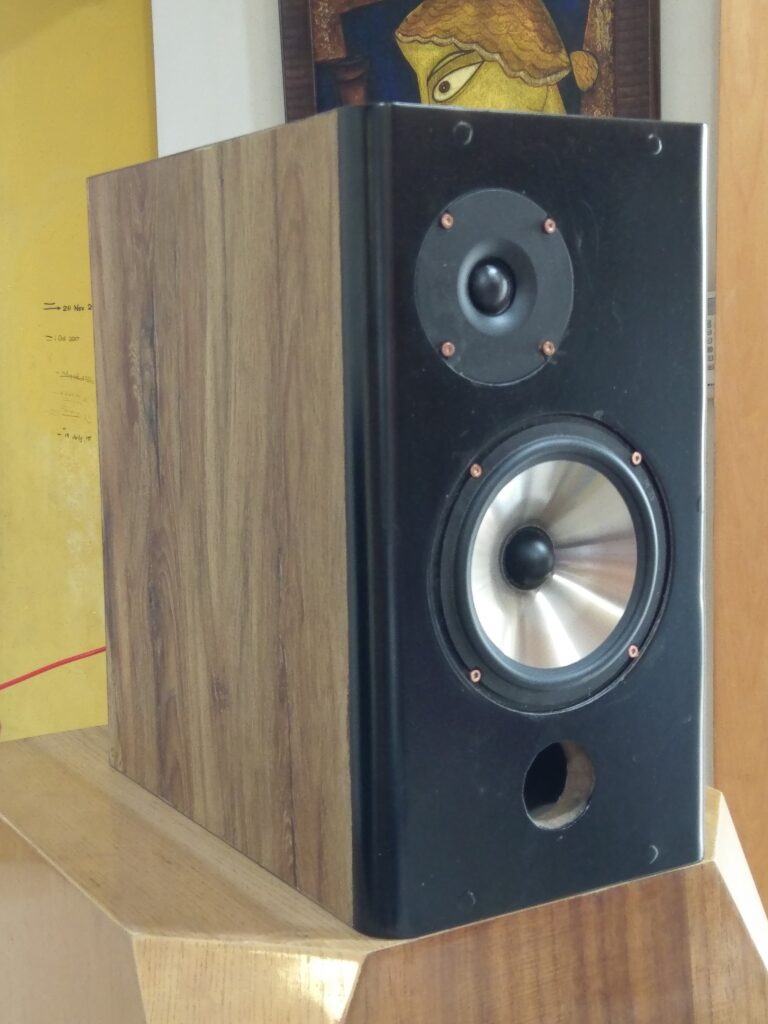
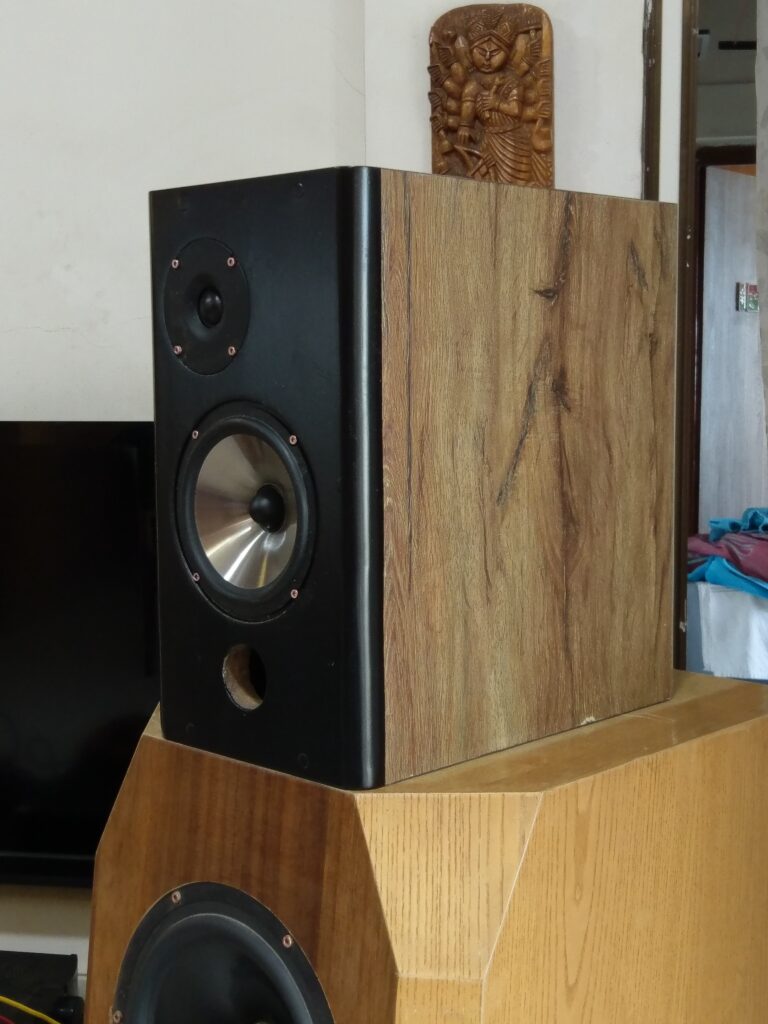
Keeping these in mind, I chose a small standmount TM configuration with a 6.5″ poly cone midbass from Peerless India and the North Creek D25 silk dome tweeter — I still had a few lying around.. The front baffle would be painted black, and the other surfaces would be clad in laminates. The shape would be the usual rectangular box, and a bass reflex port would grace the front baffle.
This project was a part of a pair of designs, the other one being the Bhairav, a small MTM with similar goals. Neither the midbass driver nor the tweeter are available now.
Drivers
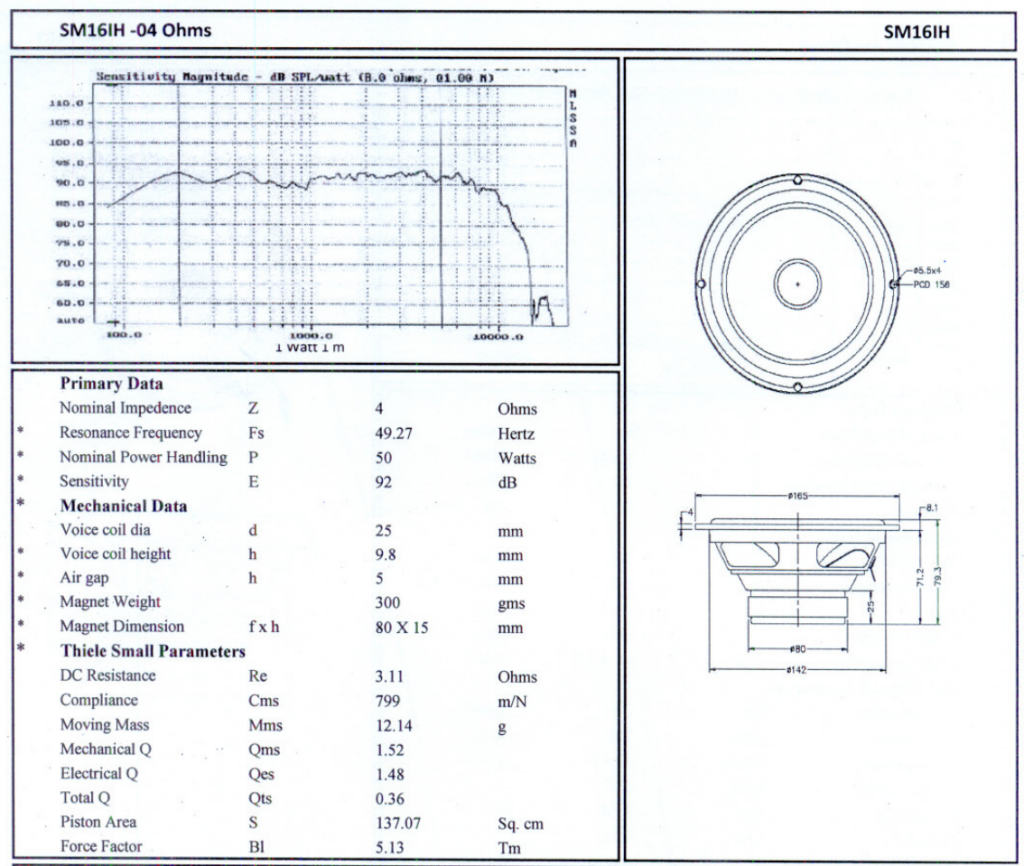
The Peerless India SM16IH is the midbass being used. I do not know if this is available any more. It has a stamped steel frame and a poly cone. The cone has some sort of plating or coating which is aluminium coloured, so it looks like a metal cone, but it’s not.
The manufacturer provided a smudgy, photocopied-then-scanned datasheet. The T/S parameters of this manufacturer cannot be trusted, and the SPL curve looks beautifully smooth, which is often the case with paper and poly cones.
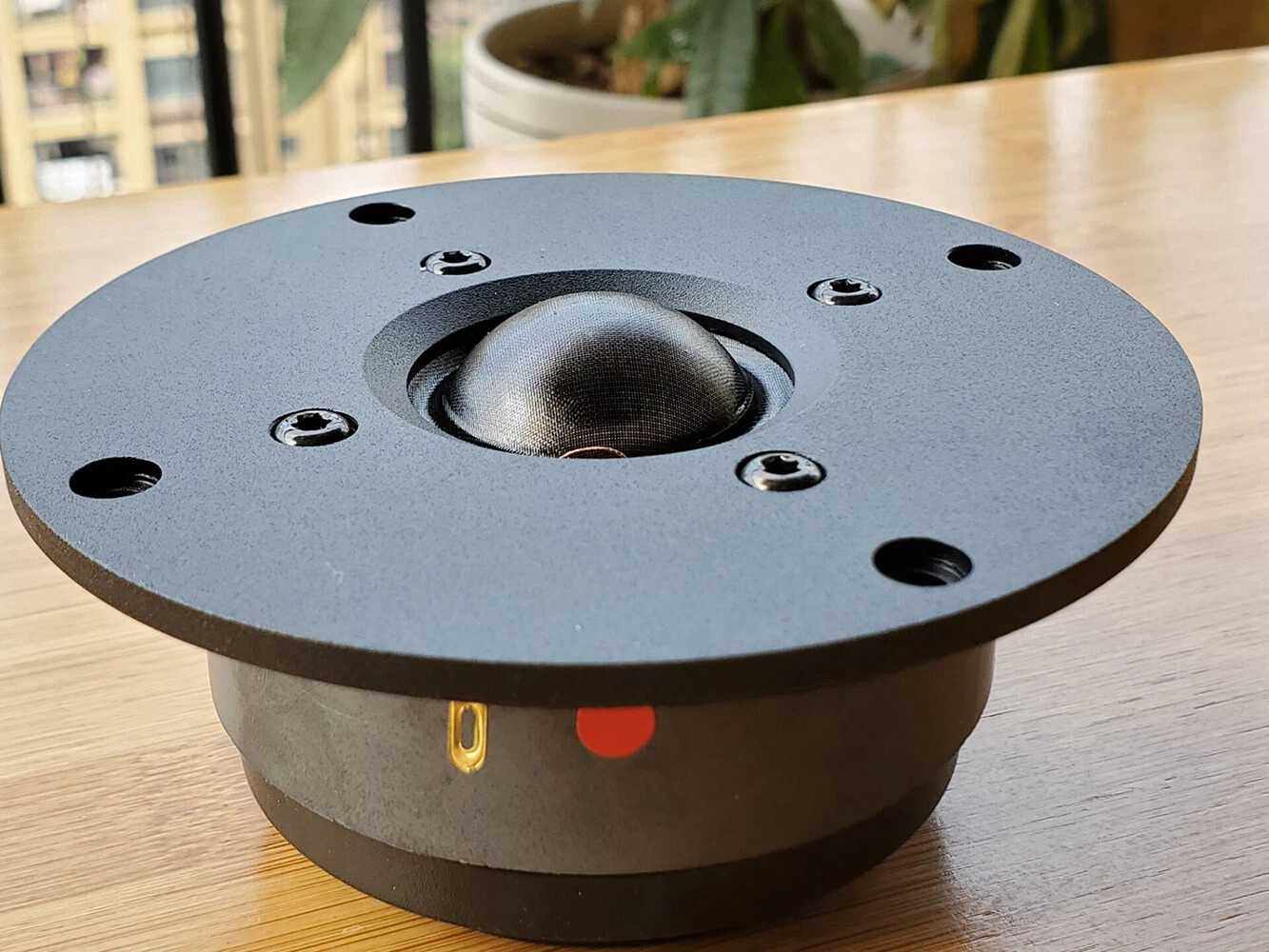
The North Creek D25 is being used for tweeter duty. I happened to have a few lying around, they are extremely good for their price, and are not made any more.
The enclosure
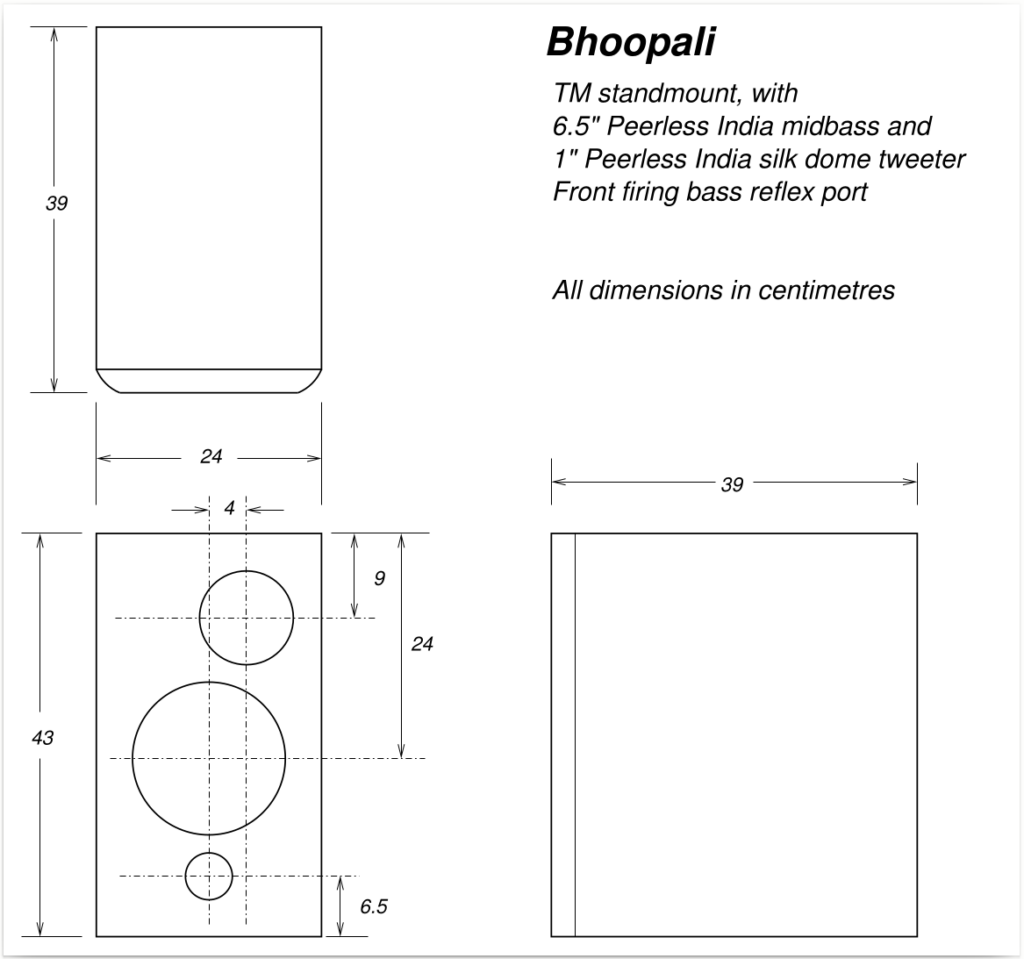
The external shape and size of the box is shown below. TWEETER MODEL TO BE CHECKED LATER. The box couldn’t be simpler. The vertical edges of the front baffle are rounded off with a 1″ radius roundover bit.
The internal structure of the box is below:
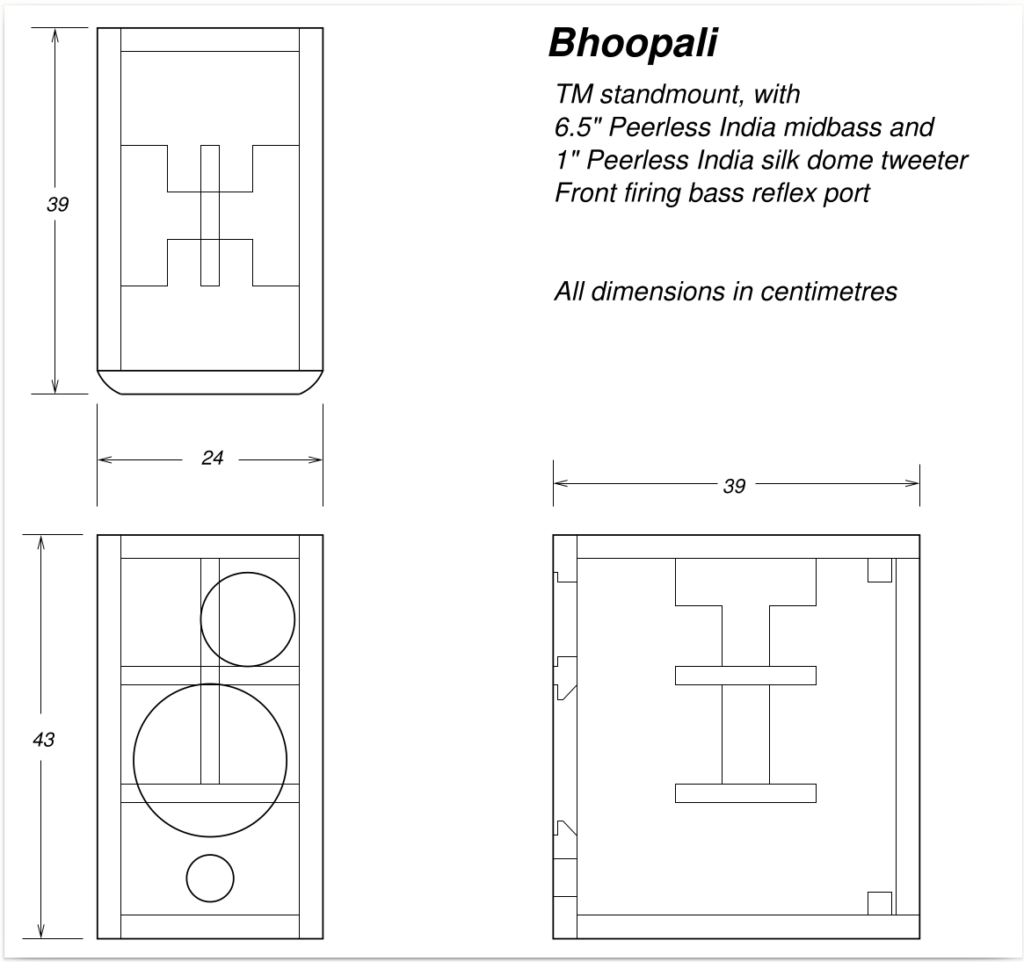
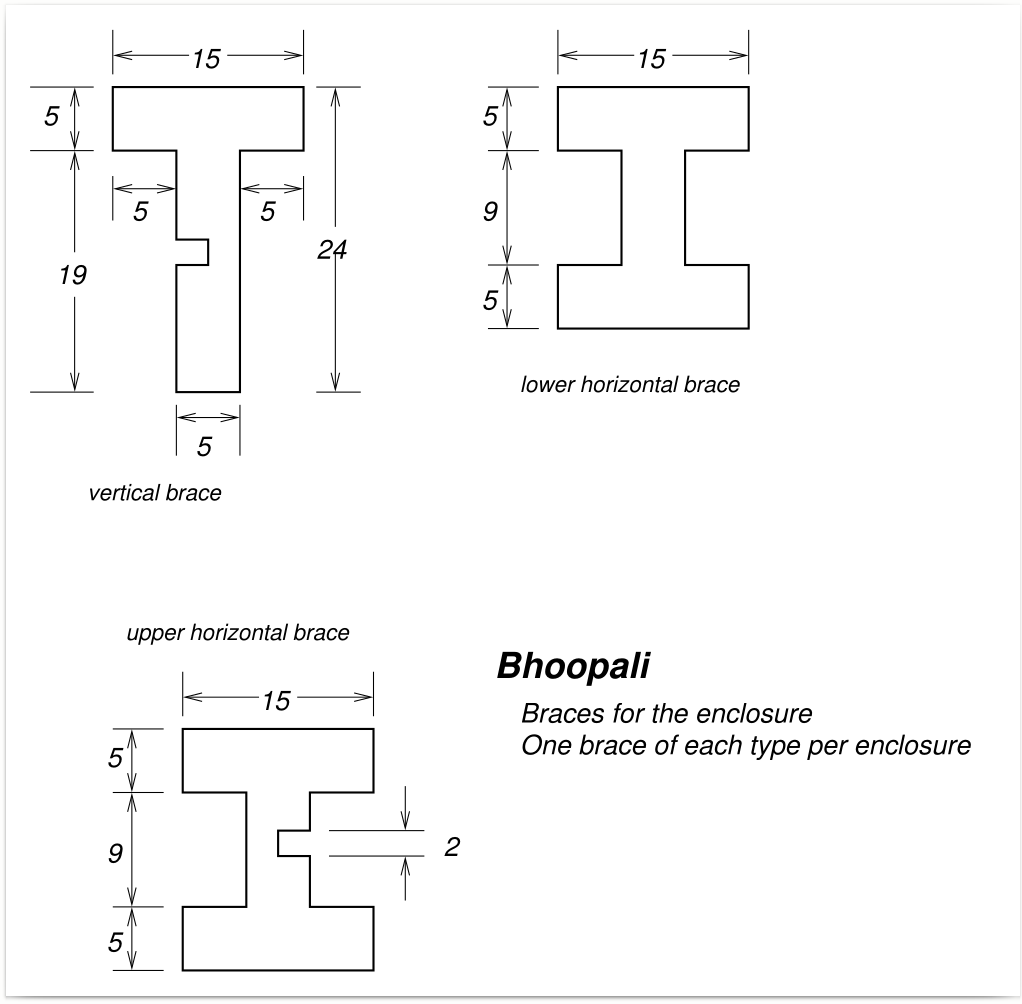
The internals shows that I’m using two cross-braces side to side, and one central brace from the top plate to the lower cross-brace, making for a rigid brace structure. As usual with my builds for the last decade or so, the external walls are 25mm MDF and the internal braces are 18-20mm commercial ply.
Brace details:
The T/S parameters were measured, and gave me this bass reflex alignment:
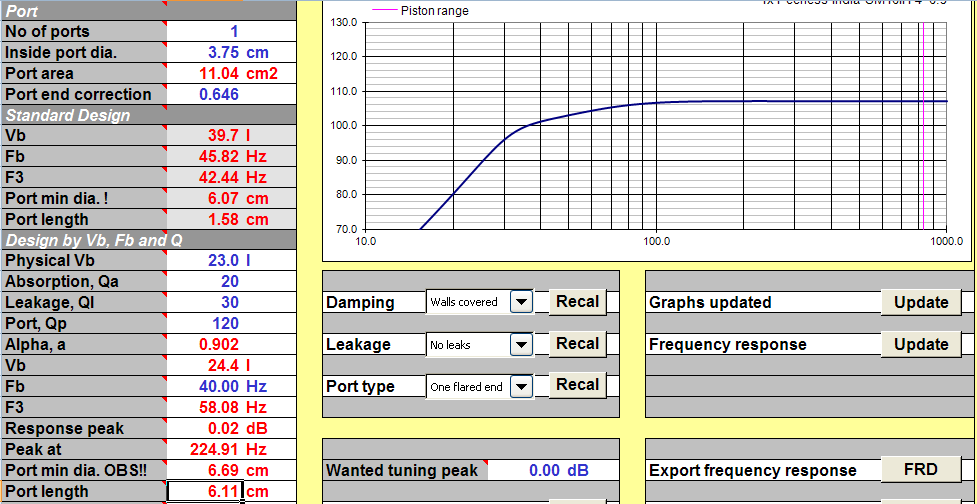
I’m using a 1.5″ diameter duct and I’m getting a fairly short port length.
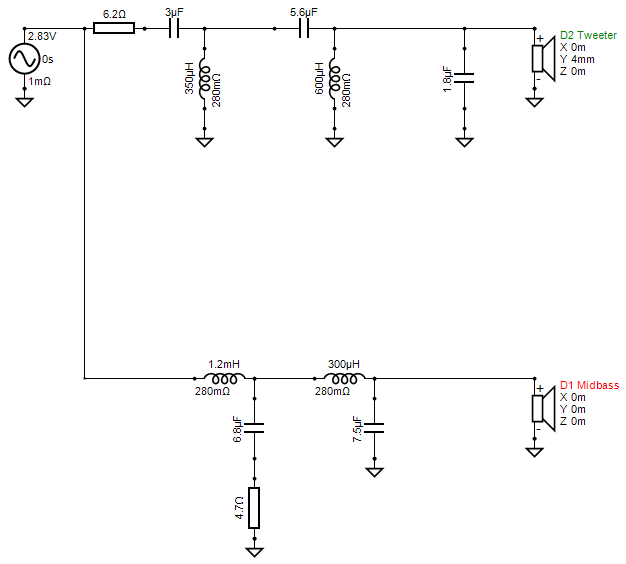
The crossover
I was using a program called XSim in those days to design crossovers, and was making the transition to VituixCAD.
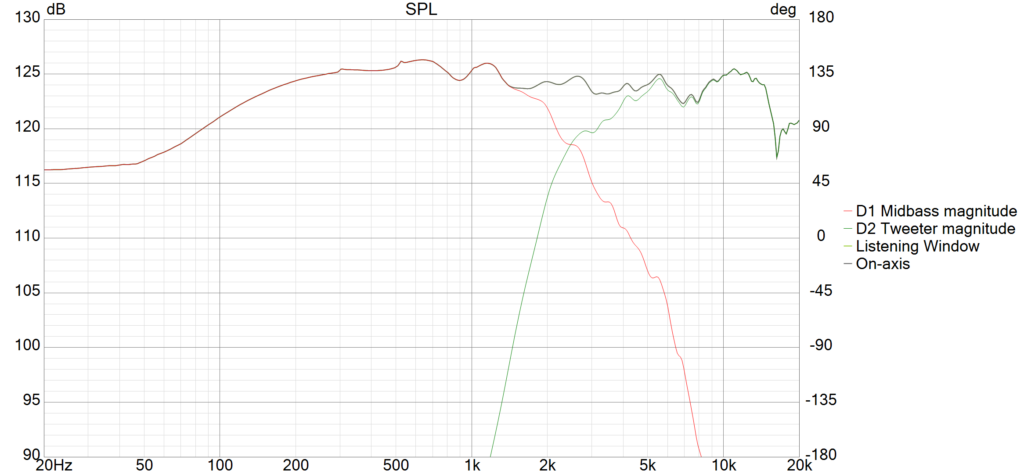
This crossover gave me this on-axis SPL, with an Fc of about 2.5KHz:
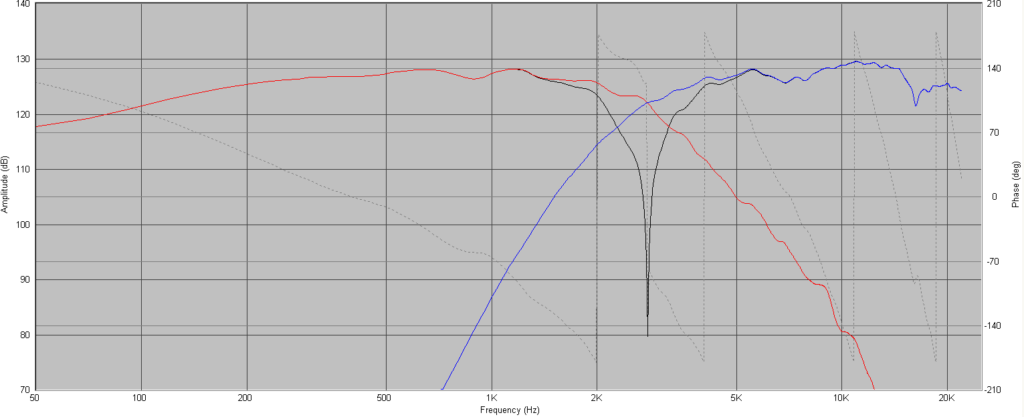
The reverse null looks like this, from an older design application (Speaker Workshop):
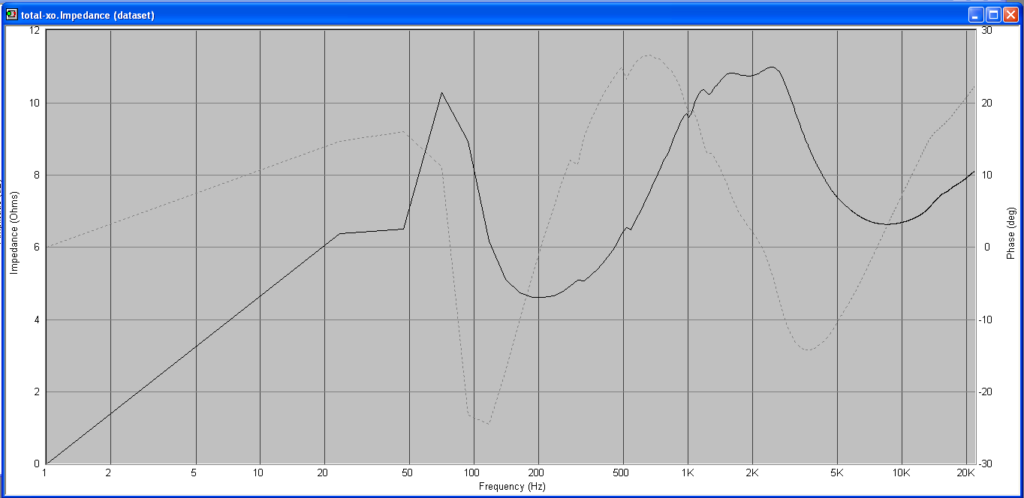
The impedance for the finished speaker looks like this. Ignore the LF portion.
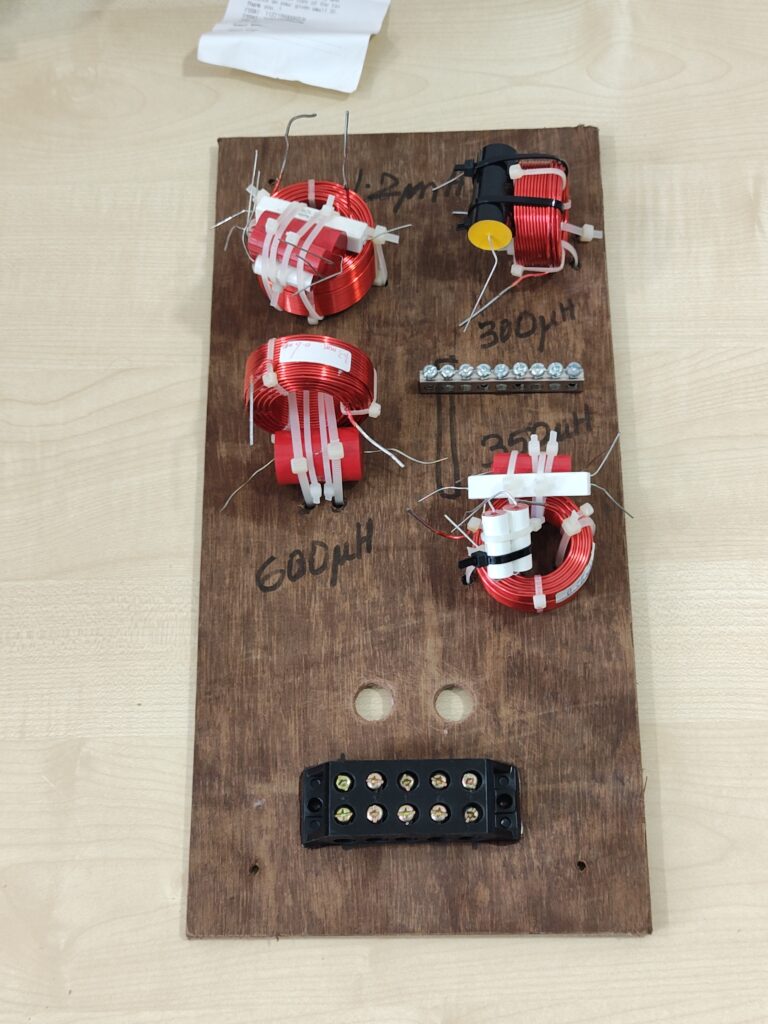
The crossover board with components mounted is shown below.