I decided to build a pair of designs using easily available (at that time) entry level drivers, just to see, how bad can it get? Our obsession with the high end is tiring sometimes, and makes us lose perspective.
So the aim was
- Low cost
- Entry level drivers
- Laminate cladding and painted front baffle, no veneer, no PU polish, no Baltic birch
- Use drivers which have benign parameters and SPL characteristics, sacrificing the last two inches of performance if needed. For instance, use soft cone material for the midbass, so no cone breakup
- One sheet front baffle, instead of my more common two sheets (50mm) baffles
- Use mainstream crossover components (basically, use less expensive capacitors, but don’t use polar electrolytics either)
- Small, standmount
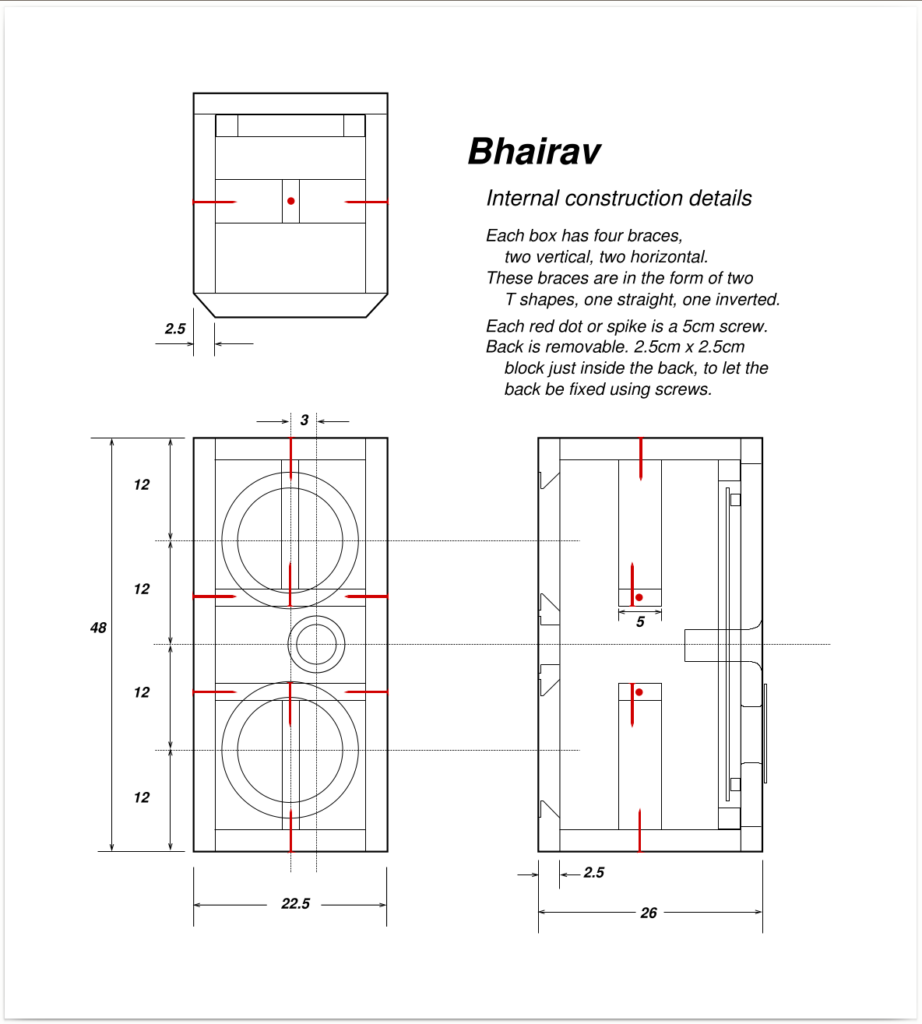
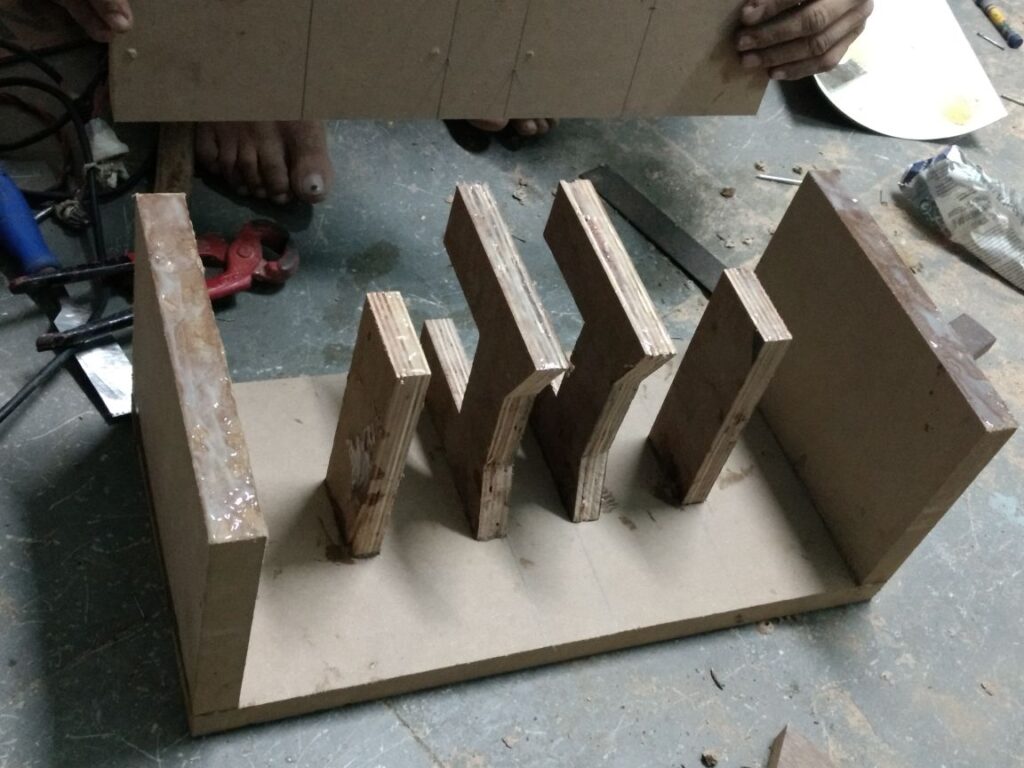
- No cutting corners with the enclosure — use 25mm MDF for all surfaces
- Design the crossover carefully. Treat it as a serious project
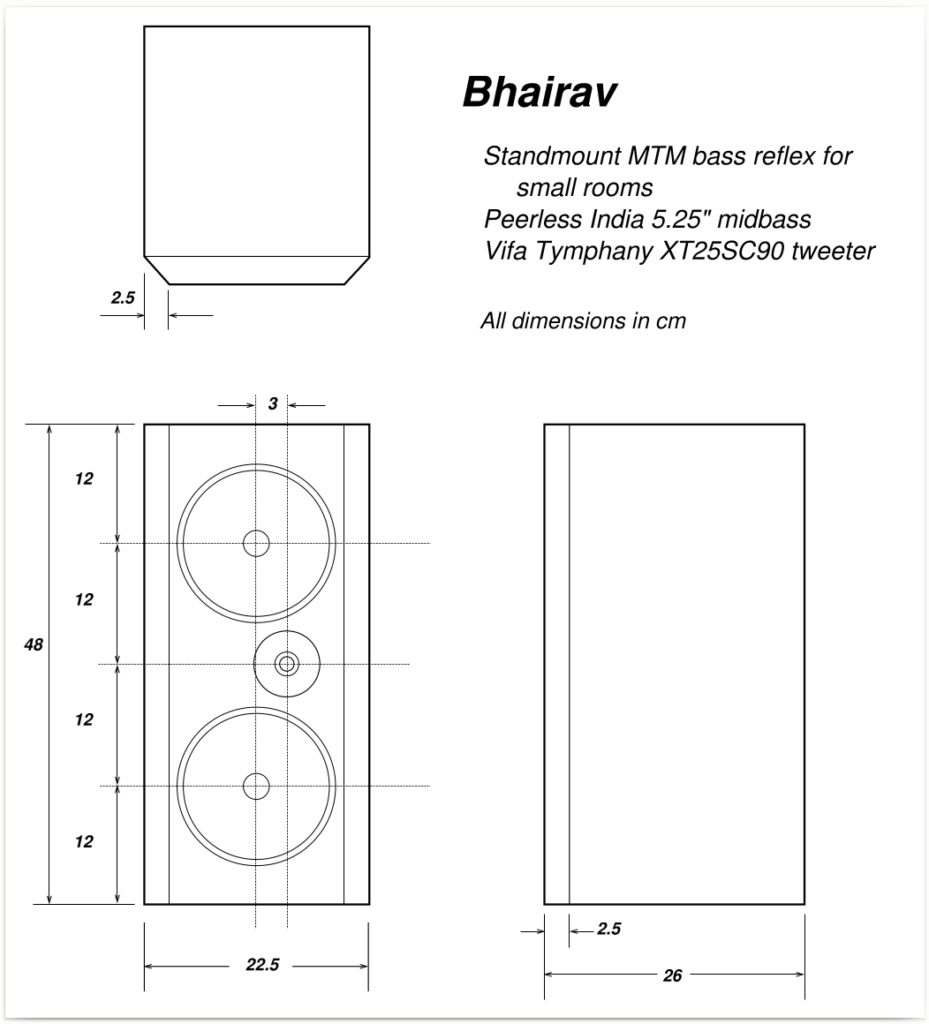
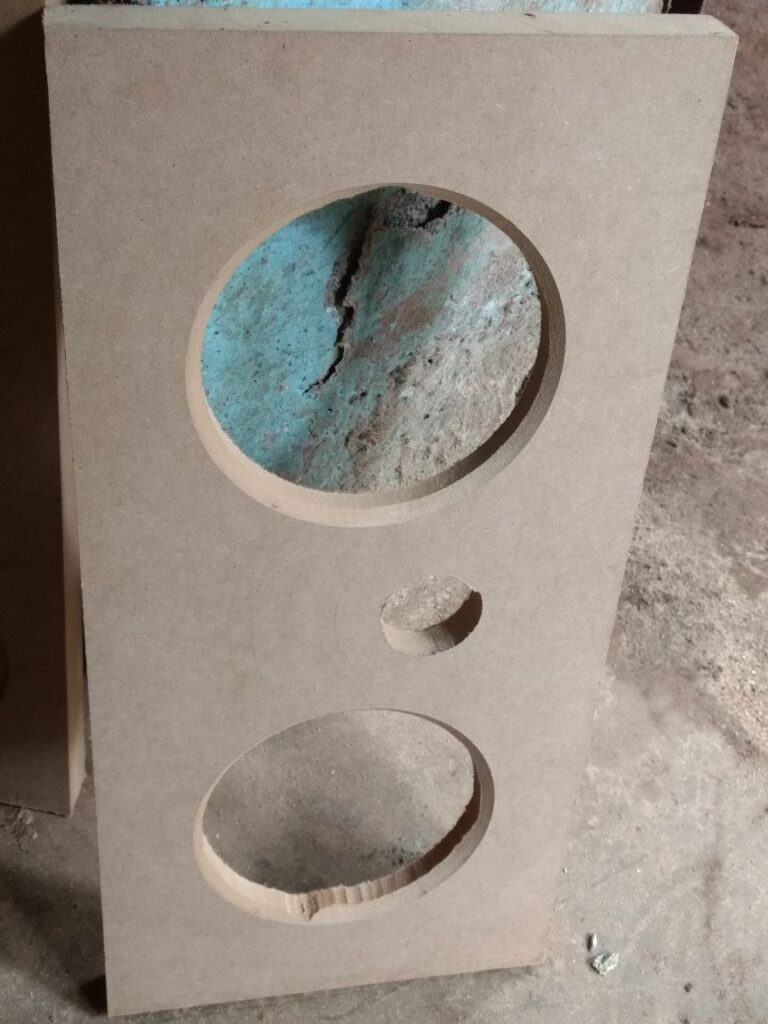
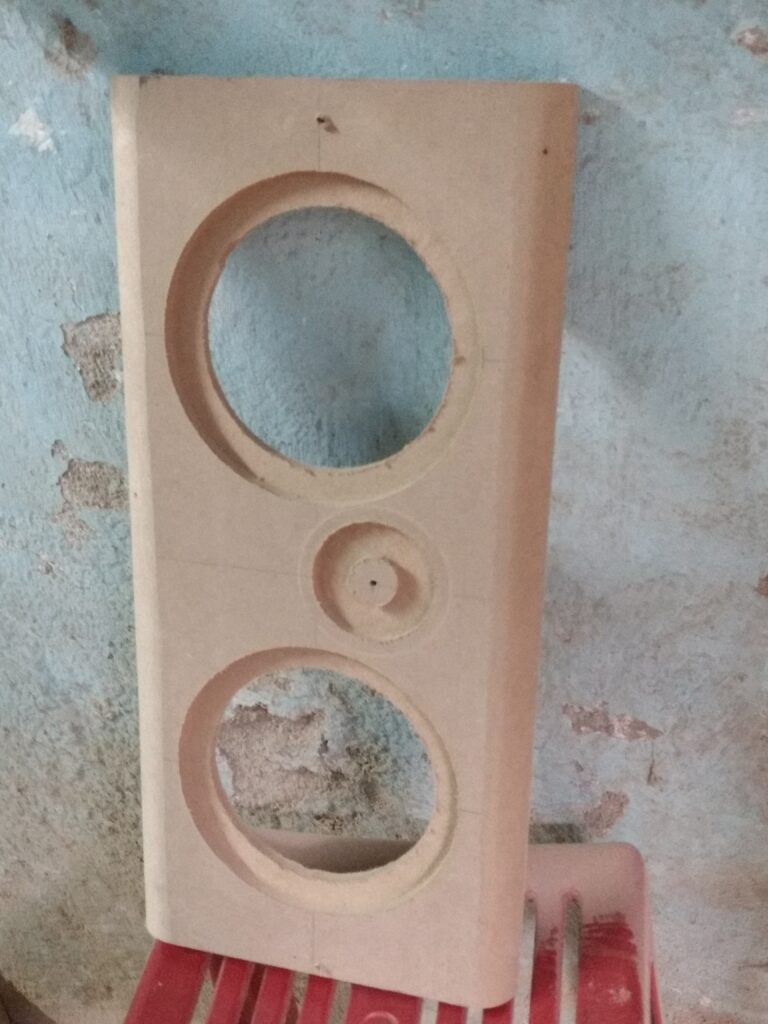
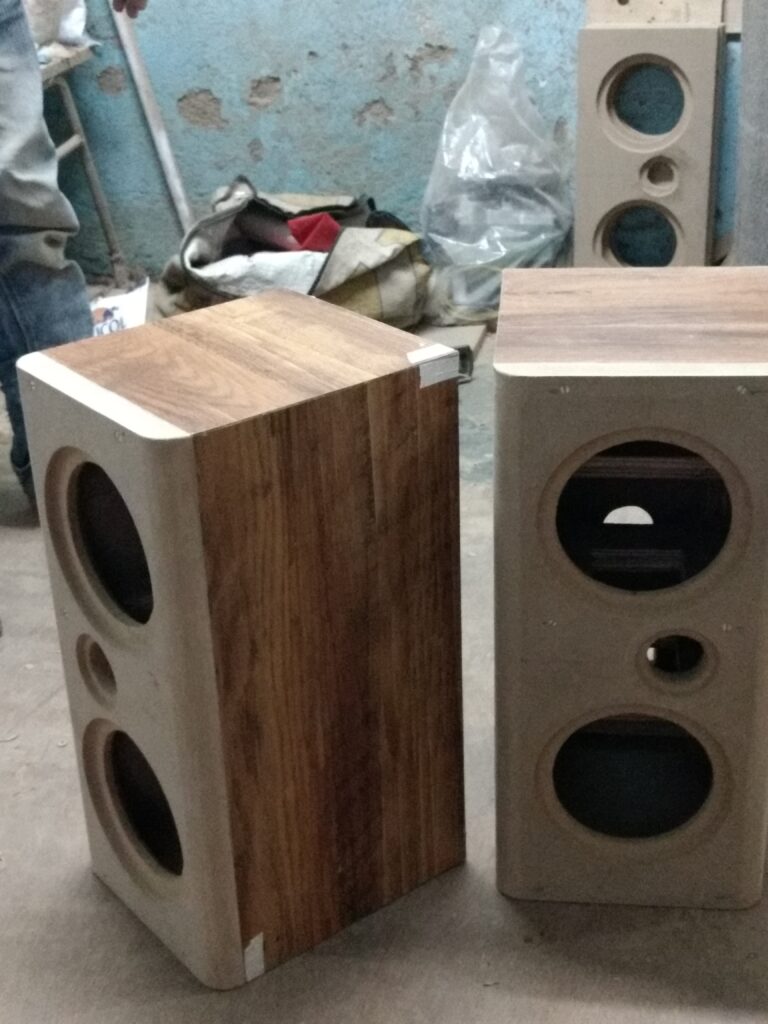
Keeping these in mind, I chose a small standmount MTM configuration with a pair of 5″ poly cone midbass from Peerless India and a soft dome tweeter. The front baffle would be painted black, and the other surfaces would be clad in laminates. The shape would be the usual rectangular box, and a rear firing bass reflex port would be used.
This project was a part of a pair of designs, the other one being the Bhoopali, a small TM with similar goals.
Drivers
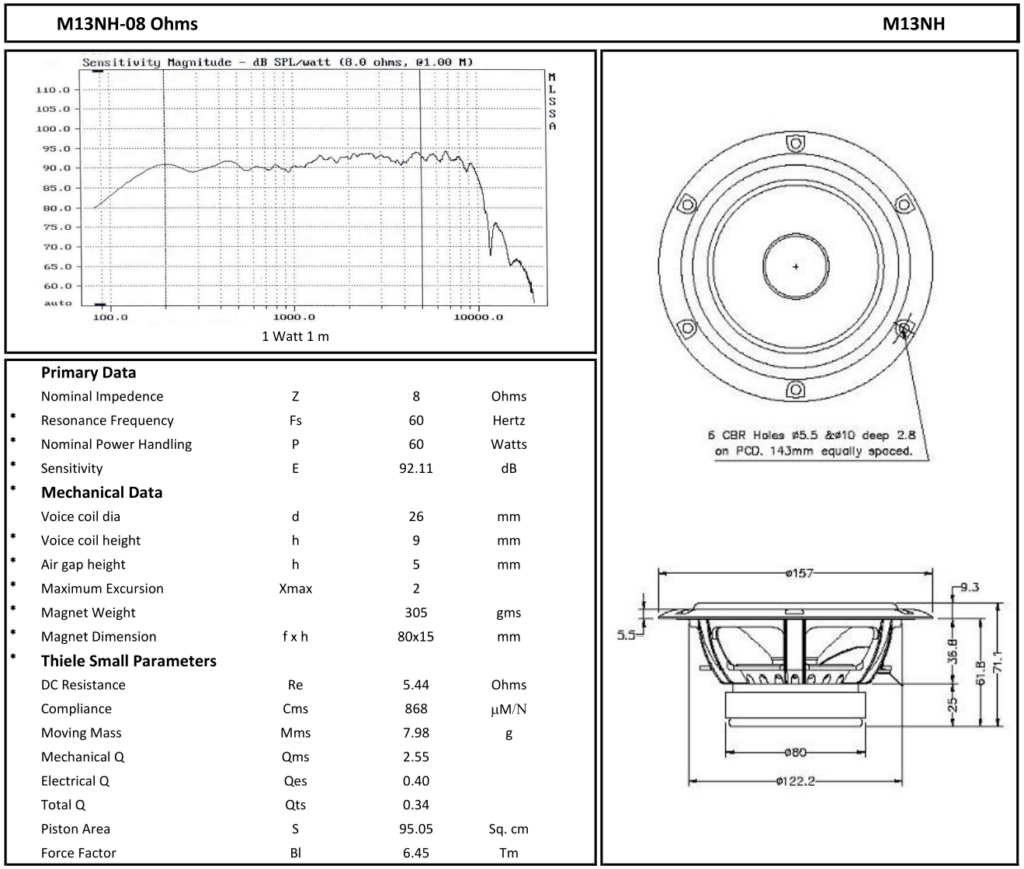
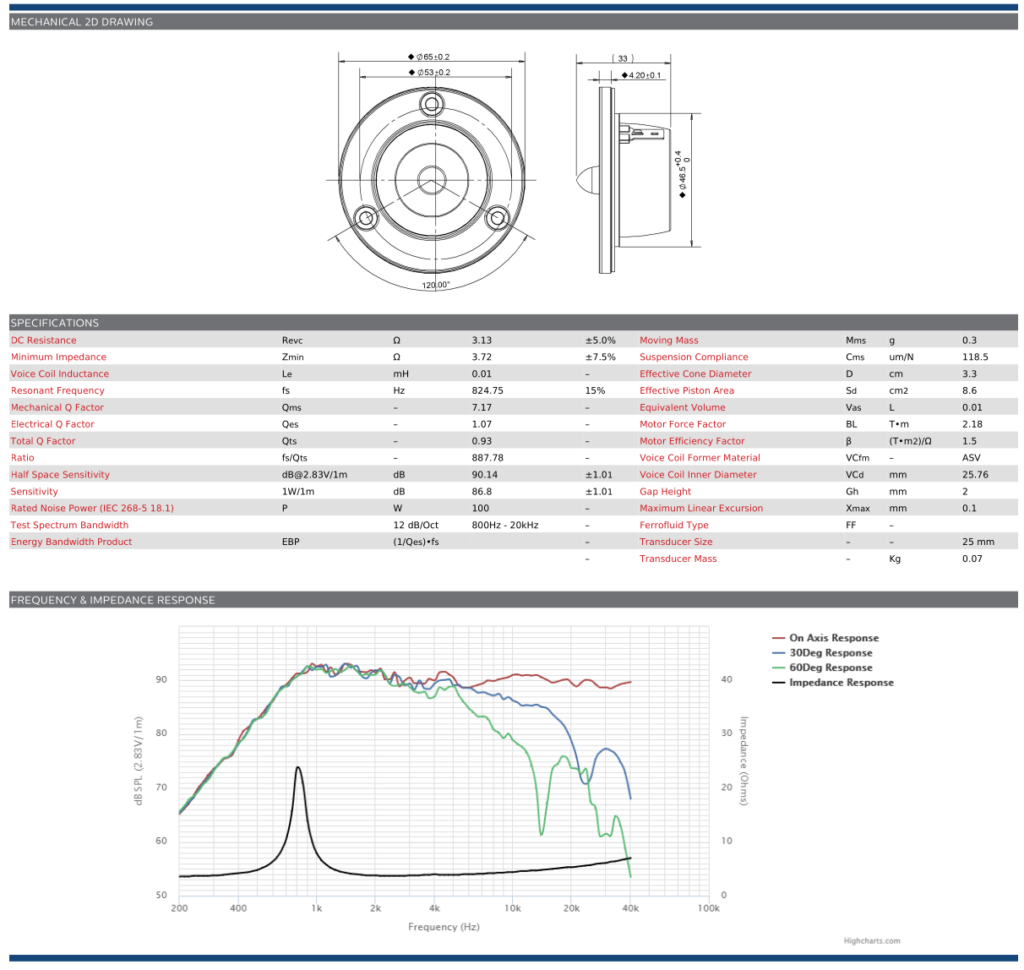
The midbass driver is a pair of Peerless India M13NH, with a coated paper cone, a polymer chassis, and a very benign SPL graph. They are wired in parallel. The tweeter is the small Tymphany XT25SC90 ring radiator.
The enclosure
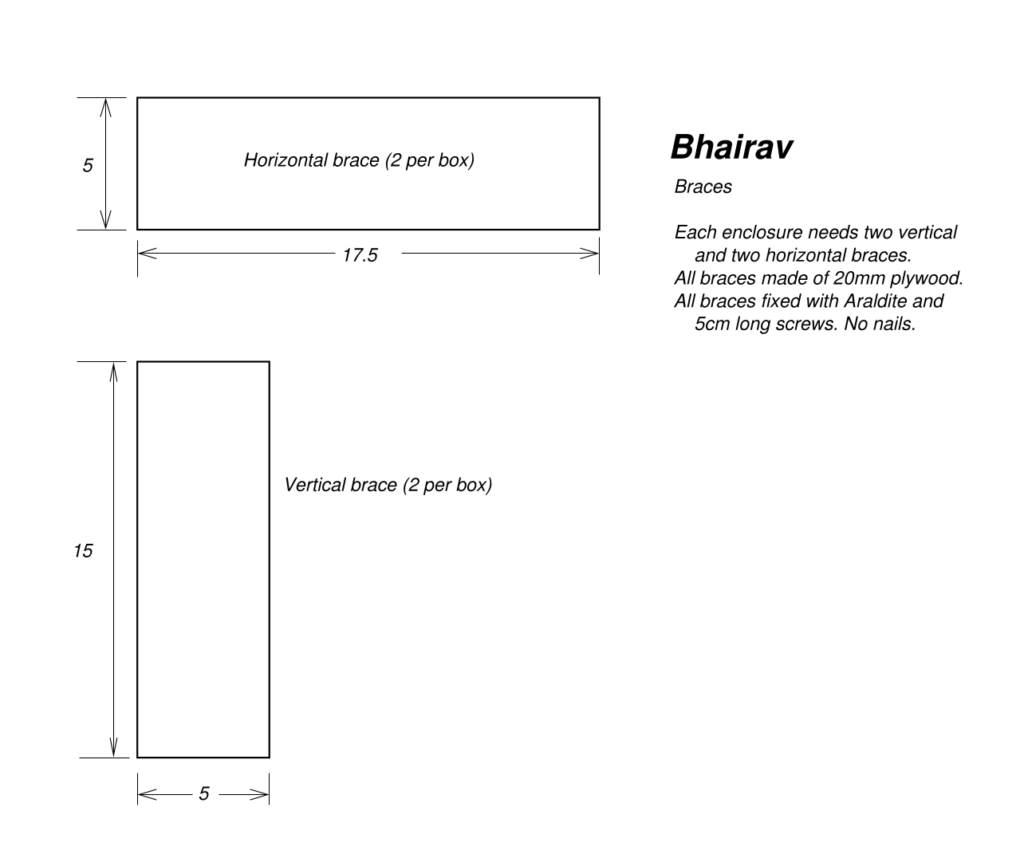
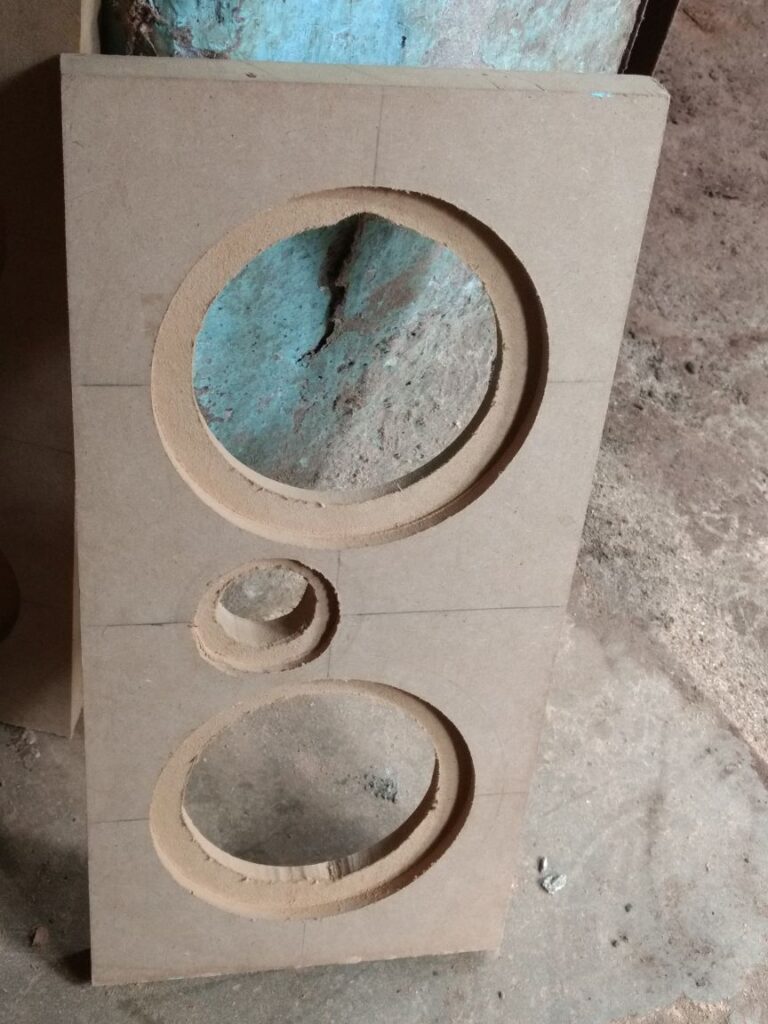
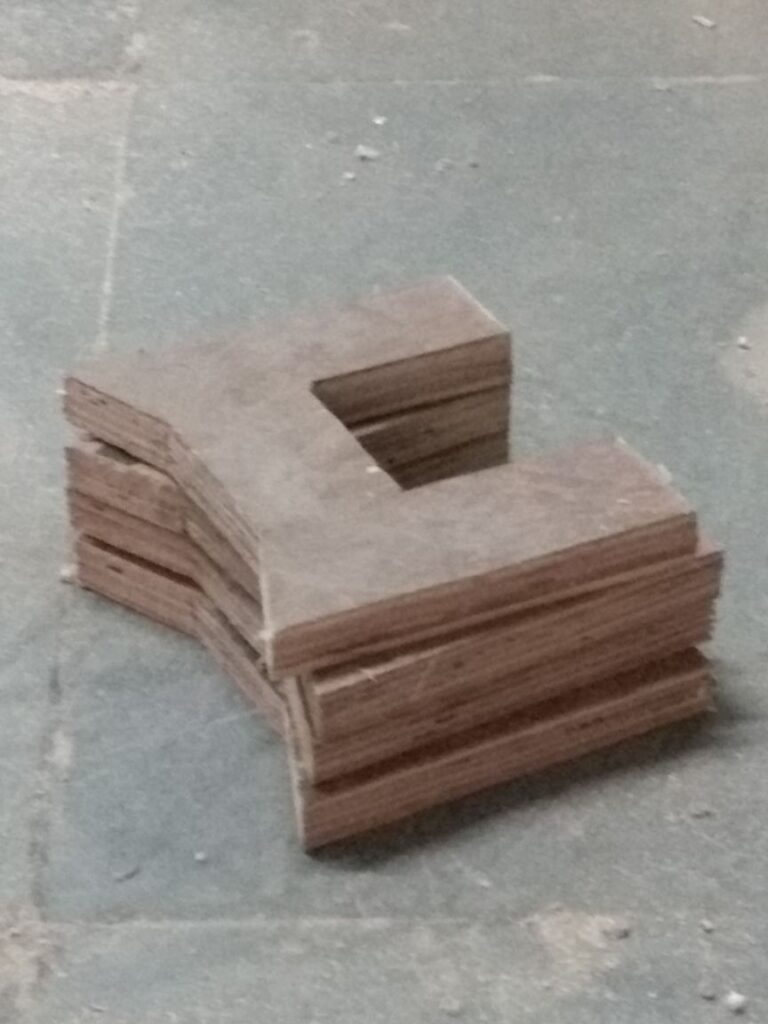
The enclosure is simple — a case of form following function.
The crossover
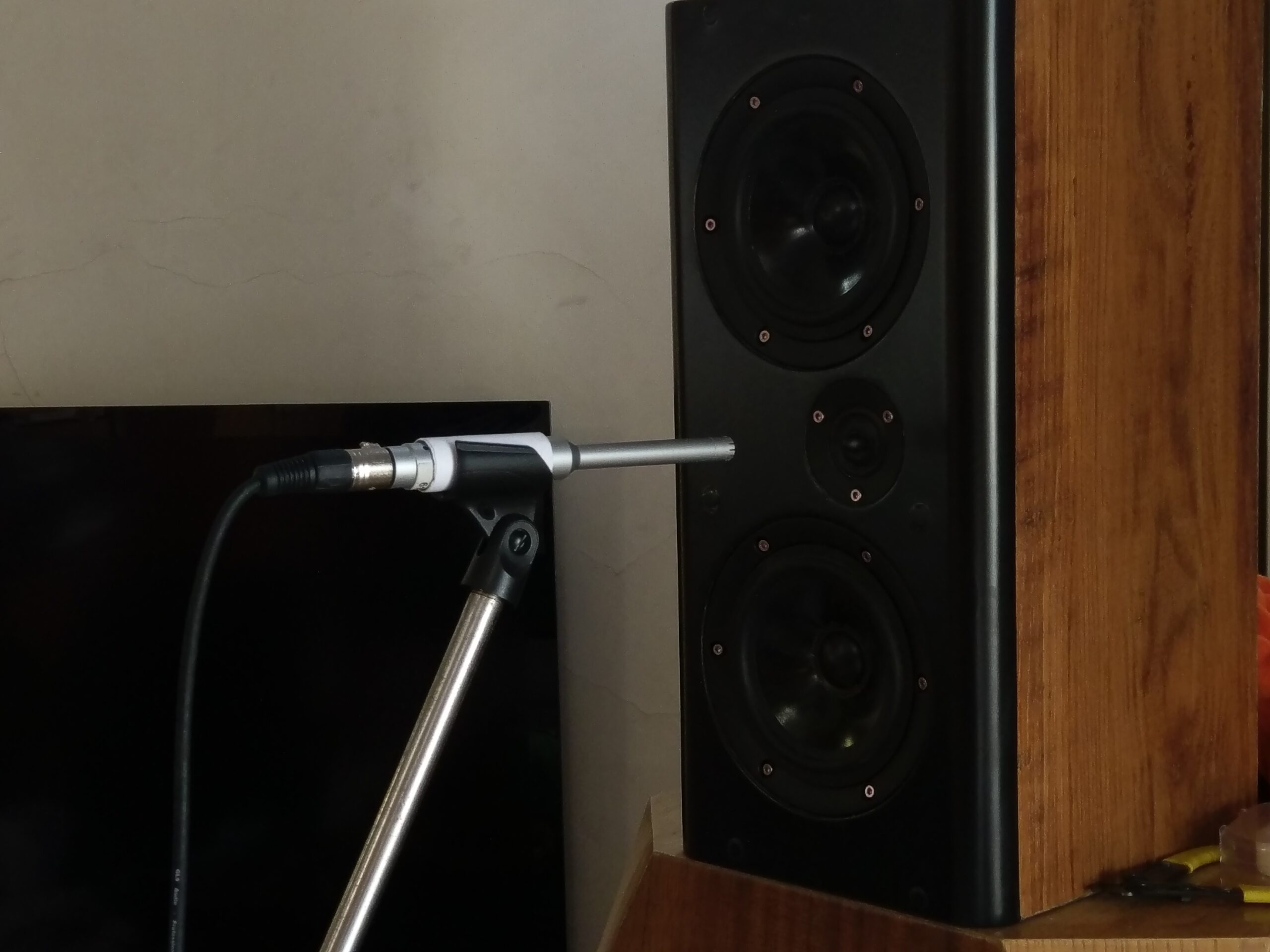
The crossover starts with measurements. Here goes the set of raw driver measurements.
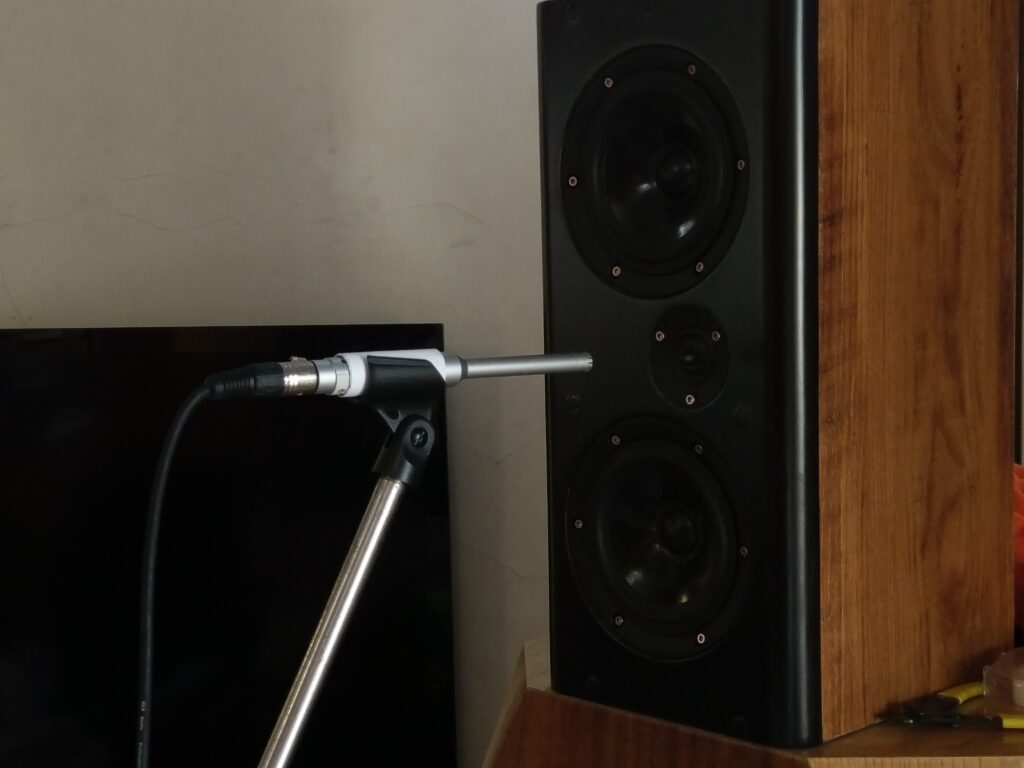
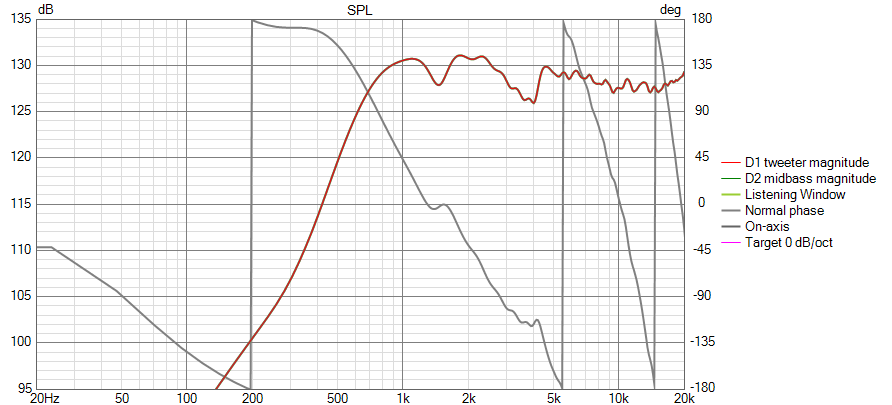
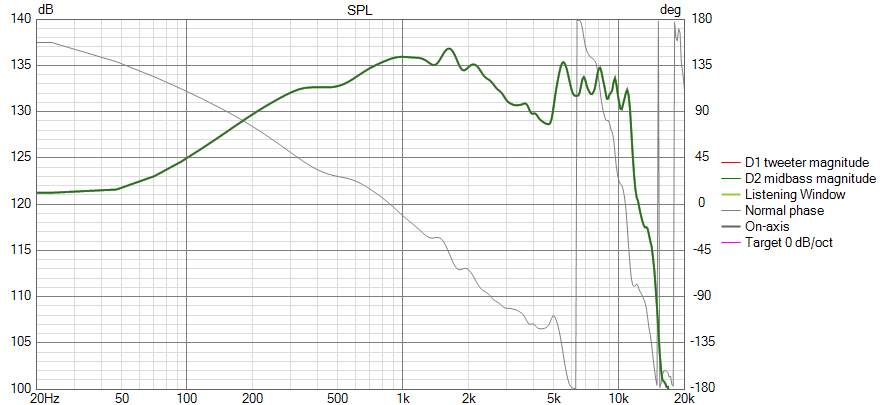
The midbass drivers show severe cone breakup, but this won’t be an issue because it’s fairly high up above the intended crossover frequency.
The two drivers’ raw SPL plots look like this:
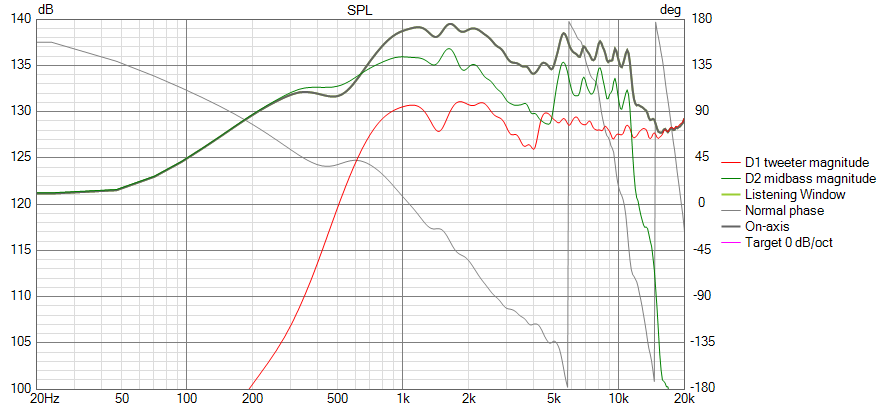
The sum of the drivers is a thick black line which is not useful at this stage, but it shows the individual driver SPL and their relative levels. No nearfield measurement has been merged with the gated farfield for the midbass drivers, since that measurement is not needed for crossover design for a 2-way speaker.
Now the crossover which emerges from all this is:
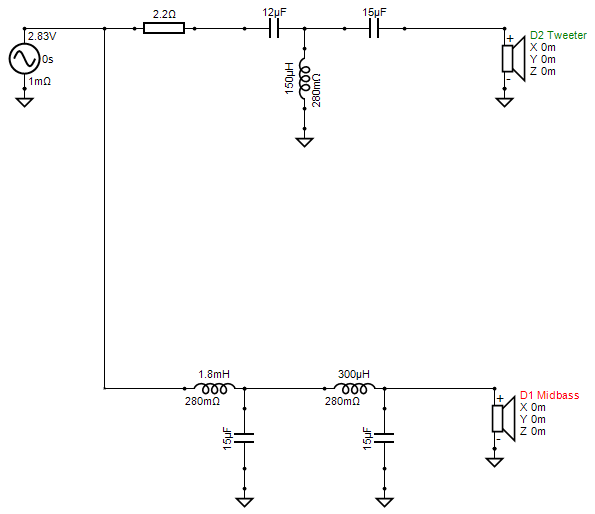
The crossover is simple, third order electrical for the tweeter, fourth order electrical for the midbass, resulting in slopes which are acoustic fourth order for both sides.
The SPL which comes after this crossover is integrated is as follows:
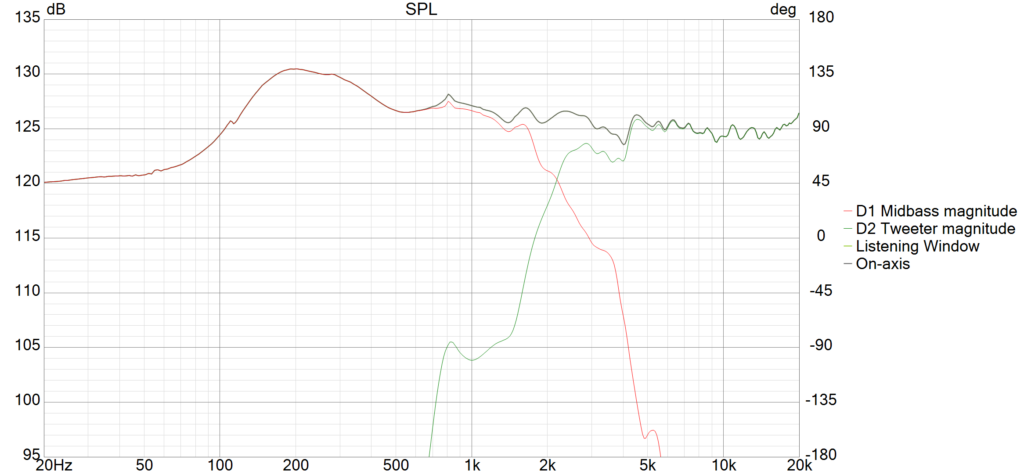
Shows a crossover frequency just above 2KHz and a fairly smooth flat on-axis response. There is a decent baffle step compensation rise below about 400Hz, which will be useful to fill in the lower range.
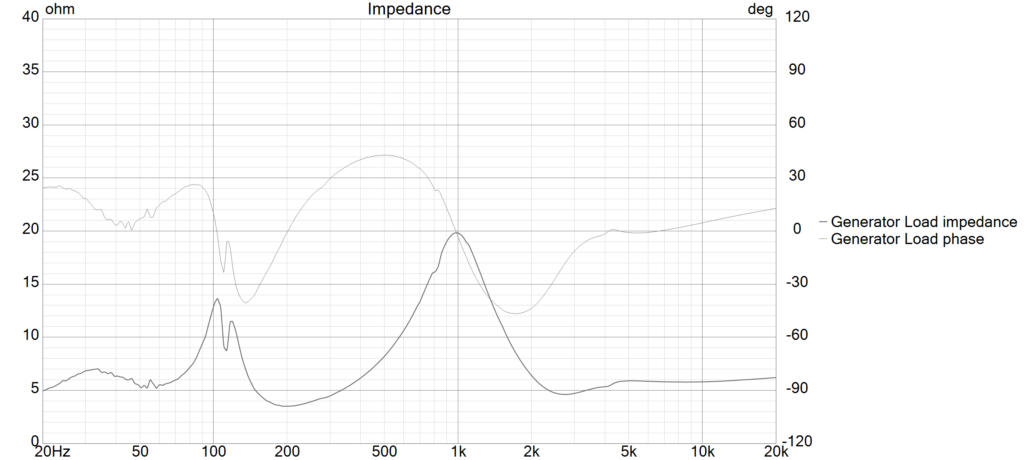
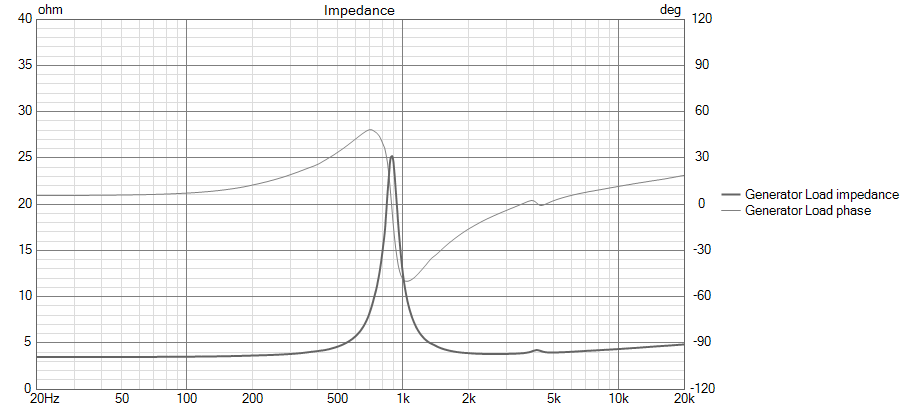
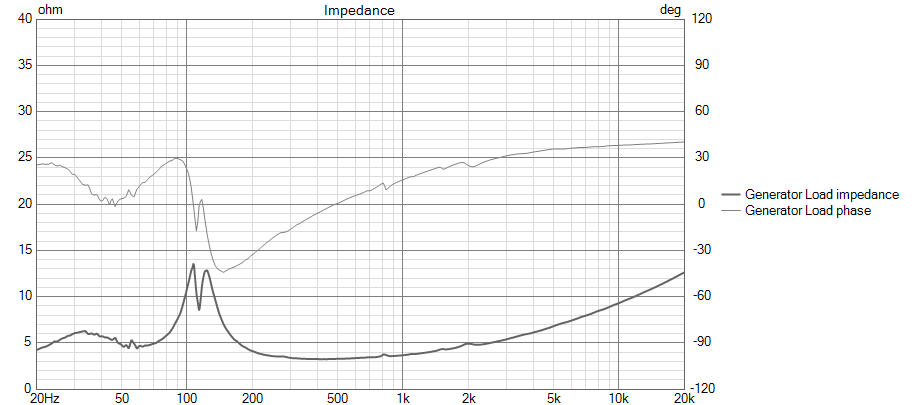
The impedance is: