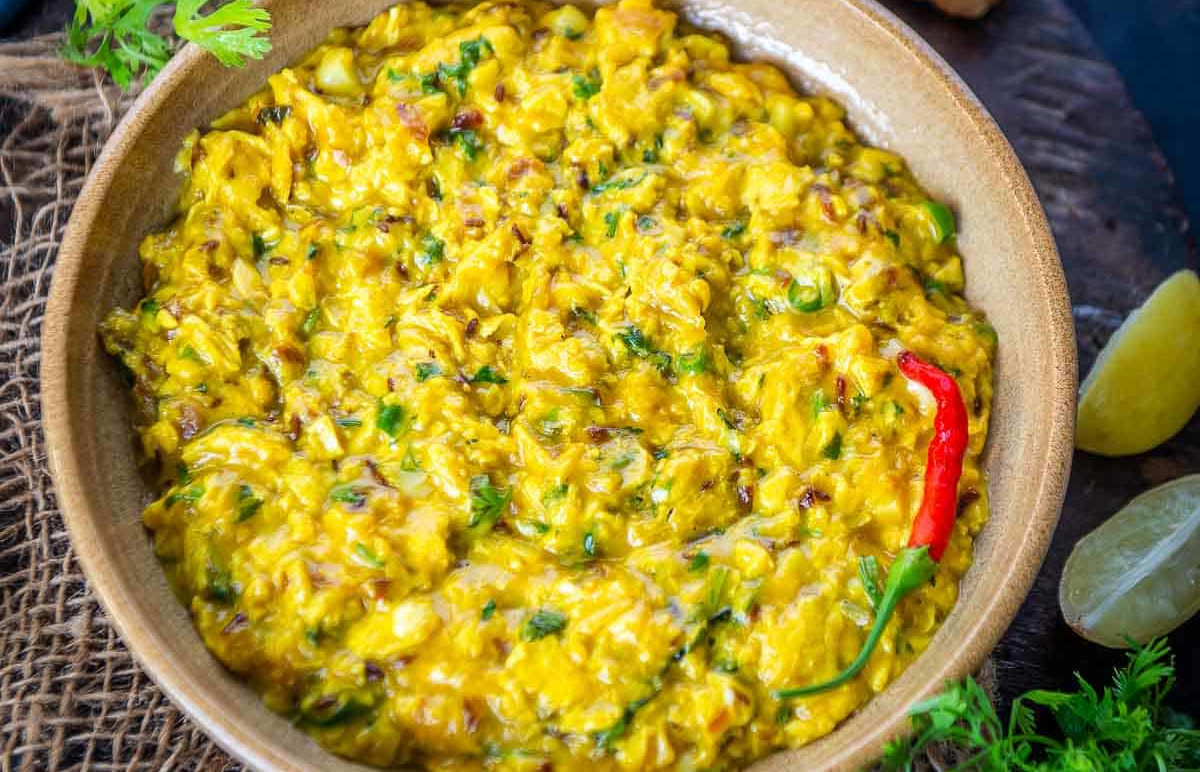
Parsis love their eggs. The akuri is their gift to the world.
The akuri is the only dish in this Set Of Four which lets you cook its spice base and refrigerate it for future use. Many Parsi aunties apparently do this as a matter of course, which is quite sensible considering how frequently the akuri is made in many households. This makes the akuri a very practical and yet sophisticated dish to serve rapidly — you get all the aroma of the spices, all the flavours and smoothness, but don’t suffer the delay. The spice mix is the part which takes time.
The akuri is a strange dish. It has the most spices of this set — yes, even more than the shakshuka — but it does not taste spicy. In fact, it tastes quite aromatic and smooth. Well, the smoothness is partly the texture too. And since it has the least amount of vegetables other than the classic western scrambled eggs, you need more eggs to feed the same number of friends when serving akuri. I consider three eggs per head as an absolute minimum for a good breakfast.
In Bombay, which is the centre of Parsi life as I know it (I haven’t been to Sanjan and Daman etc) it’s not easy to find good akuri at a restaurant. It’s fashionable for restaurants to claim they’re serving akuri, but they land up serving burjee, and most people wouldn’t know the difference — they’re just happy to be served an exotic name. The truth is that the burjee and akuri are in some respects at opposite ends of the spectrum.
Ingredients (serves 2-3)
- Eggs: six
- Onions: uncut volume equal to three eggs
- Tomatoes: uncut volume equal to the onions
- Coriander leaves: about half cup to three-quarter cup, finely chopped
- Green chillies: 3-4, finely chopped
- Garlic paste: one heaped teaspoon
- Ginger paste: one heaped teaspoon
- Coriander powder: one level teaspoon (dhania)
- Cumin powder: one level teaspoon (jeera)
- Turmeric powder: half teaspoon (haldi)
- Salt: half teaspoon
- Cooking oil: 4 tablespoons
Cooking
- Chop onions and tomatoes as fine as you can.
- Add the oil in a kadai or wok, heat on medium flame, add the onions and chillies
- Turn down the heat to ensure that onions do not char, and fry for a minute.
- Add the ginger and garlic pastes, the coriander, cumin, turmeric powder. Stir into the mix so that the pastes and spices fry with the onions and no lumps are left. If the mixture seems to be getting too dry or sticking to the pan, add 1-2 tablespoons of cooking oil.
- Once the onions are soft and grey, add the tomatoes. Keep frying till the tomatoes soften and lose their individual piece shapes and begin to become pulpy.
- Add the chopped coriander leaves. Fry for a further minute.
- Beat the eggs in a bowl with your favourite egg beater, turn down the heat, and add the eggs. If the eggs sizzle even a bit when they hit the pan, the pan is too hot.
- Add the salt.
- Start stirring, to ensure no lumps form. Keep the heat really low, because there is no penalty for heat being tool low, but if it overcooks, the damage can’t be undone.
- When the mixture thickens to the point where it is barely out of pouring consistency, remove from flame and serve with oven-grilled buttered pao and milky, sweet Irani chai.
Notes
- This dish cannot be embellished with cheese. Don’t even try.
- Some people like red chilly powder in their akuri. If you’re unsure, I suggest you try without it and make up your mind. I’ve tasted really hot akuri at Jimmy Boy in the Fort Area of Bombay.
- The most important point to a successful akuri is the slow, careful stirring on very low heat. Everything needs to blend into a homogeneous mixture and it must not dry out. It takes patience.
- It’s perfectly feasible to make the spice mixture beforehand. Follow the steps till just before you add the eggs. Cook slowly, stirring to make a smooth paste-like mixture. Remove from heat and refrigerate. When you wnat to use it, add a tablespoon or two of oil in a kadai under medium heat, dump the mixture in the oil, stir for a minute, lower the heat to minimum, wait for a minute for the pan to cool, add the beaten eggs and salt, and proceed as before.
- The fundamental difference between the akuri and the burjee is that the burjee needs less spices but tastes sharper, and is cooked from beginning to end on high heat. The second difference is that less eggs go a long way with a burjee — a lot more onions and tomatoes are used there.
- The proportions of the spices is what I’ve arrived at, and most people who’ve tasted my akuri have loved it, but an authentic Parsi auntie may wag her finger disapprovingly — I don’t know. If you have access to such an auntie, I suggest you check with her.
- You’ll be surprised how little akuri comes from three eggs. Be careful about this when feeding a large hungry horde.