For those who do not know me personally, I was born in 1964 and grew up in a very middle-class family in India. My father is an electrical engineer by qualification and was an officer in a government-owned power generation and distribution company; my mom is a housewife; I have a brother six years younger than I. I still live in India. I am from Bengal — this means that there is a high likelihood that my parents will like both music and books. In my case, both were correct, though I suspect my mother loves music more than my dad.
I am going to go on a flashback journey here, recounting all the music systems I have seen, used or otherwise lived with as part of my life. When I look back at the story in totality, I can see that my family, and later, I, upgraded our music system roughly once every decade.
HMV Star (early 1970s)
My earliest memories of a music system was a record player called the “Star”, made by the Indian arm of HMV. HMV was, and is, a household word in India, but I didn’t know at that time that this was originally a British company.
This record player’s chassis was made out of some sort of thick synthetic substance: it did not appear to be metal, though it might have been. The body was square, perhaps 12″ per side, and there was a lid on a hinge. With the lid closed, I will guess that the height of the resulting box-like shape would be eight to nine inches. You had to open the lid and keep it open while playing records. The turntable was bigger than the 7″ discs, and 12″ discs would project outside the chassis when placed on the platter. The tonearm was heavy by modern standards, and had no counterweight. If I were to guess, I would say that the tracking force of that tonearm was not less than 25 grams.
The chassis below the platter must have had an amplifier, because sound came out of the box when a record was played. Thinking about it now, I guess this was a valve amplifier. I do not remember anything of the sound quality, because it was with us only till I was about ten.
I do not have any memories of how my parents used to sit or walk about while playing records on this record player. I only know they used to play it often, and had quite a few 78 RPM and other records. I have a dim sense that playing music on this device was one of the things my parents found interesting.
Bush System Seven (1974)
Sometime in 1974, the new and interesting things people talked about included something called the “stereo system”. This was fundamentally a different animal from old record players, because it had two speakers, and you could hear two different sounds from them at the same time. This allowed you to hear something called the “stereo effect”. (I never knew words like “soundstaging” and “imaging” till the start of the new millenium.) I never thought to ask whether the “stereo effect” had any connection with music. Today, when I see “home theatre systems”, I feel like asking whether it has any connection with the basic enjoyment of either music or motion pictures.
My maternal uncle, who was a Captain in the Army and was therefore considered a man about town, had just bought a small stereo system: the HMV Model 606. It was HMV’s entry level model. Like the others being advertised at that time, it had a breathtakingly beautiful thing: a clear Perspex lid, through which you could actually see a small 7″ record playing. It also had a sleek, wide chassis which looked space-age when compared to the earlier boxy record player bodies, and it had two speakers, separate from the body, with black cloth fronts and wood-finished sides.
We were considering whether to buy the Model 606, or the larger and more powerful Model 1212, or any other make and model. I still remember that the Model 1212 ads said it had a power output of “12 watts peak, or 6 watts RMS, per channel”, and also offered the almost magical feature of an Auto Level Switch. If you pressed the switch, the system would automatically control the level of the music to ensure that no passages were too loud or too soft. (I am sure those early systems had nothing remotely like what we call dynamic range compression today, so I have grave doubts today what that Auto Level Switch actually did.)
Finally, after auditioning the affordable models on offer multiple times at multiple shops, and spending sleepless nights pleasantly dreaming about all of them, we bought something called the Bush System Seven, made by the Indian arm of the company called Bush. It had no Auto Level Switch, but it was deemed by my parents (and me) to be better sounding than the HMV systems, even though HMV was the market leader.
The price? Sixteen hundred and four rupees. I remember this figure exactly and with complete clarity. (At today’s exchange rate, this would be about USD 35; at the rate of that time, probably a hundred dollars and change.) I asked my mom yesterday what my dad’s salary was at the time. She says it must have been about three thousand rupees a month.
I remember Kaviraj Auntie, our next-door neighbour, coming to our place to listen to the new “stereo system”, and then giving her considered verdict. “The sound is superb,” she said. What is interesting is that she said the complete sentence in Bengali, but used the English word “sound” in it. This flipping to English for critical attribute gave the attribute a wholly more technical and sophisticated air, and thus ascribed a far greater weight to her considered opinion. Kaviraj Auntie was older than my mother, and her husband was a far more high-ranking officer than my dad. Hence, this extra import and impact of her assessment was wholly appropriate, and all of us in my family — my kid brother excluded, he was too young — felt gratified. Here was someone who had done what was expected of a senior neighbour — she had bestowed on our new family member, the Bush System Seven, legitimacy and refinement.
In Feb 1975, my dad was transferred from Maithon to Panchet (can you find them on a map?), another colony perhaps fifteen kilometres away. We were to stay in Panchet for four years till 1979, after which my dad was transferred back to Maithon, to a new department. This Bush System Seven stayed with us right through all these transfers, and worked well.
The basic chassis was an all-in-one amplifier cum turntable, as before. Its tonearm was visibly lighter than the earlier record player, and my guess is that the tracking force would be between 5 and 8 grams. There was no counterweight at the end of the tonearm. It used a ceramic cartridge and a sapphire stylus, and supported all three rotation speeds. There were no new 78 RPM records coming out at that time; the only ones we had were old ones. The movement of the tonearm on and off the platter was totally manual, and needed a careful hand. By this time, I was old enough to be allowed to cue the tonearm onto a track. So my mother and I became avid users of the music system, and I began to develop a personal relationship with the activity of listening to music. And my mother used to play music on the system for a couple of hours every day, while she worked in the kitchen. When I think about it now, music was a very important and visible part of our lives at home.
The all-in-one chassis had an amplifier, and had four sliding pots on the front panel. These were for volume, bass, treble, and balance controls. I remember having read the specs of that amplifier; it had a power rating of 5 Watts RMS per channel. The speaker enclosures were made of 12mm particle board, if I have to guess now. The speakers were two-way sealed enclosures — I am sure they did not have any ports. Each speaker enclosure was probably 12″ to 14″ tall. If I remember correctly, the speaker grille was not removable. And I am 100% certain that this system had solid-state electronics.
We used to manage the home finances carefully, and ration the money to be spent on buying music. We used to buy one LP per month. Each LP used to cost between thirty-five and forty-five rupees. There would be an eclectic mix of all kinds of music: I remember Hindi film albums (“Pakeezah” and “Hum Kisise Kum Nahin” are very clear memories from this period), Bengali songs (Rabindra Sangeet by Suchitra Mitra, Kanika Banerjee, and Debabrata Biswas), and a lot of instrumental music. I remember Hindi film tunes played by Sunil Ganguly and Batuk Nandy, and the new craze: Ananda Shankar. It is really sad that Ananda Shankar’s genius has not been captured and subsequently re-released on CD. I also remember Western music being bought: Abba, BoneyM and The Ventures. I clearly remember “Honey Honey” and “Ring Ring, why don’t you give me a call?”
I remember a neighbour lending my parents an “interesting” LP. (Lending records itself was an unusual activity; records were treated like family silver, and no one outside the family was trusted to handle them properly.) This “interesting” LP scandalised my parents, and when I heard it, I could see why. It was an LP by Donna Summers, and the first track was “Oooooohhhhh… love to love you, baaaaaby….” This LP was returned to its owner rather hastily. These memories are quite sharp, because they are all part of a larger picture of what was happening in my life. I was learning about the human reproductive system at school, and elsewhere too. My parents were reading dozens of books by an author named “James Hadley Chase” — till date I do not know whether this is the name of a real person, and cannot guess his gender. In school, we were smuggling Nick Carter novels out during lunch break and reading the accounts of utter satiation which seemed to follow almost immediately after the hero began to work on the woman at hand. When not looking for insights into satiation and human reproductive systems, we were reading Alistair McLean by the gallon and tentatively exploring Frederick Forsythe and Desmond Bagley.
One thing we did not have at home was cassette tapes. Most of my friends had cassette tape recorders (mostly portable mono ones) at home. Some of them had radio-cassette recorders, all-in-one precursors to today’s boomboxes. We used to believe, even at that time, that records produced clearer sound than cassettes, though cassettes were easier to handle. We also used to believe that records lasted longer than cassettes if handled carefully.
This system served us well till about 1982 or so, after which it began to behave erratically. The tonearm began to skid across the record surface, a phenomenon we used to refer to as “slipping”. So this tonearm would suddenly “slip” half an inch in the middle of an LP, and would do so completely unpredictably. We failed to get it fixed properly, though we tried more than once. By that time the world of “stereo systems” had taken another jump forward, and we felt it might be time to replace our system. We were in the eighties, and I was about to enter college.
The Sonodyne system (1983)
I left home in 1981, after Class 10, to join St.Xaviers College in Calcutta for my Plus-2, and live in a hostel there. I finished my Plus-2 in 1983, and joined BIT Ranchi. At the end of this stress-filled period, seeing me safely in an engineering college, my parents decided to exhale and spend a bit of money replacing our ageing music system. In the meantime, I had learned to peruse the used book and magazine shops on Free School Street (a street known for more adult entertainment than used books), and I had picked up a slightly moth-eaten copy of a fairly substantial catalog-cum-book called the “Audio Buyer’s Guide 1982.” Reading that book had taught me a fair bit about audio systems; I must have studied every word, every ad, in it about a hundred times. That book spoke of a different world: a world of 330W RMS/channel receivers and THD and IMD and what not.
The new system was purchased in December 1983, from Capital Electronics in Calcutta, for fifty-eight hundred rupees, and we persuaded them to even throw in a rack to sweeten the deal. The quoting price was sixty-one hundred rupees, I remember.
The biggest change we noticed in the “stereo system” market between the first-generation systems and now was the advent of component systems. Earlier, when you bought the HMV Model 1212, or the Bush System Seven, you had to buy a central chassis and a pair of speakers, as a set, much like the boomboxes of today. But in the second-generation music systems, you bought an amp, then bought a pair of speakers, and so on. Another interesting thing was the advent of these new Indian brands of “specialised” audio system manufacturers, notable of whom were Sonodyne and Cosmic. Earlier brands were either very insignificant in the market now, or had exited it altogether (e.g. Bush and HMV). We bought a turntable, and an amplifier, and a pair of speakers, all made by Sonodyne.
The turntable is still at home with me — it still works. It was a direct drive turntable with a heavy cast aluminium platter, and a tonearm which looked like space technology after the Bush System Seven. This tonearm was made of carbon fibre, and had a dial at its rear end using which you could set its tracking force: 2.5 grams was recommended. There was another dial there using which you could also set its anti-skating force, a concept which took me quite some time to understand properly. All I could understand about this was that if I set the anti-skating force too high, the tonearm stopped tracking reliably, and began to skate outwards most dangerously, skipping tracks rapidly. The cartridge was now a magnetic one (I later realised that this was a moving-magnet one, not a moving-coil), and had a nominal output voltage level of 5mV. It was made by a company called EEI. The stylus was a diamond-tipped thing. The chassis was large enough to allow the playing of an LP with the transparent Perspex lid on.
One more bit which appeared to be like space-age technology was the stroboscope on the rim of the platter, and the small bulb which glowed all the time beside it. There was a knob to let me trim the speed of the platter using this stroboscope. I was the son of a power electricals engineer, however, and my dad worked in power generation and distribution. I had visited his power station control rooms, and I knew that one of the things they tracked in those control rooms was the mains frequency — it was no God-given constant. I knew that this stroboscope was essentially working based on the strobing of the bulb (was it an LED?) at the mains frequency, and that my dad’s colleagues would consider mains frequency acceptable if it varied +/-3% from the nominal 50Hz. Therefore, I knew that this would be the limit of the accuracy of my speed control for the turntable too. I was eighteen at the time; this was not unusual insight for a boy of my age.
This turntable was almost half the price of our full kit, and cost two thousand five hundred rupees.
The amplifier is what we would call an integrated amp today. Its power rating was 20W RMS/channel into 8 Ohms, and 25W RMS into 4 Ohms. (Yes, the power output change due to halving of speaker load is strangely small by today’s standards.) It had a height of about 2U, and had a brushed aluminium front panel, with knobs in similar finish. Remote controls were still a decade away. And as was the rule of the day, a magnetic phono preamp was built in, though there was no support for an MC cartridge. I am sure there was no Indian turntable at that time with an MC cartridge.
The speakers were bass-reflex two-way designs, probably about two feet tall, and with a removable grille. I do not remember what the drivers looked like, but I believe they had a cone tweeter, not a dome, and a paper cone midbass.
I remember really enjoying music on this system. It was so much clearer than the previous one that we all began to discover instruments in albums we had owned for years, and had not noticed till then. The first few months after the system was purchased, we happily listened to most of our old favourite records and kept marvelling at the new-found sound quality. I have memories of summer vacation afternoons, after lunch, spent listening to BoneyM, Ventures, and the like. Summers in Bihar are hot; temperatures routinely exceed 45 deg Celcius. So rooms would be darkened and curtains would be drawn across the windows. The fan would be on — air-conditioning was unheard of — and all sounds were at low volume, so as not to risk being shouted at by my mom who would be enjoying her siesta in the bedroom. And in this silent summer afternoon, I would be playing the system real soft and lying on the cold concrete floor on my tummy, chin in my hands, listening.
If I try to understand my fondness for playing the system real softly at the time, I feel that I was perhaps reacting to the cleaner sound from the speakers at low volumes. Those speakers were even worse than mass-market speakers of today when it came to handling loud volumes cleanly. It is possible I was instinctively reacting to just this.
I went to hostel in Calcutta in 1981. I never got to spend much time at home after that, returning only during vacations. And since this Sonodyne system was purchased in December 1983, I was already in engineering college. So, gradually, I drifted away from my parents’ home, and began to accept that I stayed somewhere else for most of the year, and this somewhere-else did not have any music system. I built a monophonic ampli-speaker in my hostel with my friends in 1986, and it served us well for two years and more — I’ve described it elsewhere. And there was a music system in our hostel lounge which I helped select and purchase in 1985 when I was a callow second-year student of BTech. That was the system I became most familiar with from 1985 to 1988, when I graduated.
The Sonodyne system continued to function quite well at my parents’ place. My father retired in 1992, and the music system shifted with them to their post-retirement home in Salt Lake, Calcutta, where they live today.
The hostel lounge (1985)
I joined the IIT at Bombay in 1984, and within a few months, I heard that our hostel would be replacing its music system in its lounge, using the hostel funds collected from students over the years. I was instantly interested in knowing what we would buy. The Music Secretary of the hostel, who handled the music system in the lounge among other things, was a friendly final-year chap named Advani, and we got along well. So, after a lot of discussion, the hostel bought a new system. I do not remember its price, but it was far more expensive than the Sonodyne system I had seen and used at home. I seem to have vague recollections of a total bill of thirty to forty thousand rupees.
This one had the same Sonodyne turntable as the one I had at home. It also had a Sonodyne tape deck, with metal tape support. The tape transport’s controls were all mechanical — if you pressed one of the piano-key-type switches hard, you could see the tape head moving up and down by a millimetre or two. That was the beginning of my aversion for mechanical piano-key controls for tape transports.
The amp and speakers were by Sony’s Indian arm at the time, called Sony Orson. The amp had the words “Legato Linear” written on its front panel, and was quite powerful. The front panel had LEDs and push buttons for controls. There were no rotary knobs at all. These push buttons proved to be very robust and well suited to the rigour of hostel life, where the system saw two or three hours of loud playing time every evening. The speakers were three-way bass reflex floorstanders. I wish someone more knowledgeable about Sony Legato Linear amps would point me to some more information about this system.
How was the sound of the system? I somehow cannot say for sure, because it is difficult to get on intimate terms with a music system in a hostel lounge, where late-night denizens hang around playing chess or carrom till three in the morning every morning. So, my memories of the music system are that it used to play very loud, without any of the limitations of the Sonodyne system at home. The bass was good enough to lay the foundation for a party in the lounge. At two in the night, when someone played Judas Priest or Dire Straits on the system, you could take a walk around the Gym grounds and hear the sound from five hundred metres away.
We all used this system heavily, till I graduated in 1988. One of the legacies of this system is the collection of TDK and Sony cassettes I recorded on this system, from LPs the hostel owned, or from cassettes that my friends owned. I still have most of those cassettes, and they sound lovely even today.
The Akai boombox (1997)
I graduated in 1988, and began earning a living and paying my bills. I got married in 1992. CDs hit the Indian market. But I never had a music system, not even a cassette player, till 1997. This is because I never had the money to buy anything I liked.
In 1997, my wife and I decided that a life totally without any music system seemed silly beyond a point. So we would buy something which we would discard eventually, but which would at least allow us to listen to music in some shape, however mediocre. Therefore we set a clear goal for ourselves: we would go looking for the least expensive boombox which would play both CDs and cassettes. I added another refinement to this goal: I wanted something which would have logic controls for the mechanical movements of the cassette decks: I believed that solenoid-controlled logic-driven cassette mechanisms were more reliable and more precise than purely mechanical, spring-loaded mechanisms.
With this clear specification in mind, and with relatively little emotional investment, we went visiting the boombox and TV shops of Vashi, in New Bombay, where we then lived. We found an Akai system, with the lightest plastic speaker enclosures you can imagine, but it played both CDs and cassettes, and had a full-function remote control. It also had a tuner to boot. The speaker enclosures were probably nine to ten inches tall. We paid seven thousand and five hundred rupees for it — this was 1997. As per the exchange rate prevalent at that time, I believe this sum would have translated to about USD 200. As per today’s exchange rates, this sum would be about USD 150.
The PMPO revolution had hit the audio system market, so our tiny system was rated at some 400W PMPO, if I recall correctly. The specs page said that the system had a peak power rating of 3W RMS/channel. Go figure.
Not for one moment did I feel that the sound quality of this system came close to the Sonodyne system I had heard at home. But then, that was not expected. And I had acquired a deep aversion to merely the look of these plastic speaker enclosures — in my eyes, speakers were not worth touching with a bargepole unless they are finished in wood-finish. This was just my reaction to all the grey and silver finishes on the boomboxes I saw around me, together with their aerodrome displays and Turbo Bass Boost buttons.
This system signalled the start of a very important era for my home music listening. It did not have a turntable, but it had support for CDs. The epoch had changed. This was also the first system I bought without the knowledge or participation of my parents.
I used it till 2000, when we purchased our current music system. After 2000, I gave it to my parents, who are still using it occasionally. The laser in the CD transport has grown weak; it frequently fails to detect a CD when one is inserted in the drive. The rest of the system is working reliably, including the cassette deck.
Cambridge Audio and Wharfedale (2000)
Sometime in 2000, we began to yearn for a real music system; we were unable to continue pretending that the Akai boombox was producing what we could call music. We wondered whether we could get the modern equivalent of a component system for fifty thousand rupees. We wanted “separates”: a separate CD player, a separate amp, and speakers with wood-finished exteriors and weight more than 200 grams. Would such a system fit our budget?
We selected four or five CDs from our collection, and selected specific tracks in each. We put these CDs in a plastic bag, and took them around with us when we went from dealer to dealer, trying out these CDs. Sometimes we went back to the same dealer a few times, trying out various speakers or amps. We spent about four months doing this, starting August 2000. And we discovered interesting things about the Indian “high-end” audio market, as manifested in the small handful of dealers in Bombay.
We visited a small shop opposite Heera-Panna Shopping Centre in Haji Ali. They said that they did not have any amp or other components in stock, but would be happy to obtain any model and make we wanted, from abroad, once we placed an order. They showed us amps they were in the process of packing and sending off to customers — a new consignment had arrived. I remember Yamaha amps. So this was how a section of the high-end market worked. Customers were expected to be well-travelled, or well-read in the trade rags of the audio industry, and were expected to come into this shop and simply identify the exact make and model they wanted. It would be “imported” from Singapore, bypassing Customs duties, and delivered to the customer in a week or two. This “importing” was in the form of a purchase from a retailer in Sim Lim Square of Singapore or some similar mall, so end-user prices in Bombay were about 20% higher than Singapore retail prices. They still are.
We visited Sound Out, a shop inside the Heera Panna Shopping Centre, well known as a grey market dealer of audio equipment. (Once upon a time, Heera Panna was a large collection of grey market dealers in foreign goods of all kinds.) We saw some PSB Alpha speakers, some small bookshelf models from the Wharfedale Pacific series, and a few amps and CD players. We asked them whether they had any other model in stock; the shopkeeper was not even interested in discussing anything with us. He made it plain: we had to choose from what he had. He could not discuss anything about any other model, nor could he tell us anything about the availability of any other piece. We decided to give Walk Out of Sound Out.
We also went to Lakozy, opposite Chowpatty beach, and to J&B Sound, in a small lane off Linking Road, and listened to a lot of systems there. And we discovered that people buy audio systems costing upward of a lakh of rupees (USD 2000, roughly) without listening carefully to them before picking them up. We became oddballs, constantly trying to listen to the systems, though the shops cheerfully played our CDs on system after system patiently.
We also discovered this new thing called “home theater”, which added speakers and cost, but not sound quality. And everyone was buying “home theater” systems because they all appeared convinced that five speakers had to be better than two. The rate at which Yamaha home theater receivers were selling was not funny — even expensive systems, costing upward of five lakh rupees (USD 10,000) were selling at the rate of two per week at one or two dealers’.
We also discovered that all the key dealers of “high-end” audio in Bombay vilified each other, called each other names in private, and in general tried to tell all their customers how ignorant and unethical their rivals were. They would tell me stories like “Oh, he doesn’t even know how to set up a system — he called me and requested me to set up his own showroom systems for him.”
After four months of listening and thinking, we decided that we would select speakers between Monitor Audio Bronze series floorstanders and Wharfedale Pacific Pi-40 floorstanders. The speakers alone took us to the top of our budget, leaving no room for amps. We decided to opt for the Wharfedales — the Monitor Audio speakers sounded harsher, more etched, somehow. Other speakers we heard (Definitive, Infinity, Yamaha) didn’t impress us, and the Jamo D570 and D590, which sounded better than any of the others, were twice as expensive as the Wharfedales.
For the amp, we first had to take stock of our finances and ensure that there was money left over after the speaker, to let us buy any amp at all. We managed it, by encashing some fixed deposits. I was getting petrified looking at the mounting total — my wife was very encouraging and quite unfazed. We had initially thought that we would buy a Marantz 6010 OSE amp, but after listening to this new, totally unknown brand of amp called Cambridge Audio at J&B Sound, we heard an amazing degree of difference. It was as if the Marantz amp was damping down a lot of the frequencies in a wide midrange band — we couldn’t even hear the tanpura in one track properly, which was so clear and smooth on the Cambridge Audio amp. If anyone ever tells you solid state amps playing at low volume have no audible differences, do not believe him. We had one advantage for comparisons at that time; we had chosen our speakers, and those were standing in the same showroom. So we could compare amps using a specific set of known speakers and a specific CD player. We were really impressed by the Cambridge Audio’s sound, and we decided to pick it up, even though it was more than 50% costlier than the Marantz 6010 OSE.
So, without having planned for so much investment, we now became owners of a pair of Wharfedale Pacific Pi-40 speakers and a pre+power amp combo, the C500 and P500 from Cambridge Audio.
We really didn’t have any money left for a source. So we thought we would just get amp+speakers home with us for now, and buy a small tape player later, to act as source, till we found the money to buy something better to play CDs or tapes with. But seeing our plight, Jacob Koshy of J&B Audio threw in a shop-demo CD player (the Yamaha CDX-396) at a price we couldn’t refuse. So we came home, on the night of 30 Dec 2000, with a $2000 music system — just the interconnects and speaker cables cost us more than to $100. We, like most government projects, had exceeded our budget by 100%, and like most ministers in most democratically elected governments, we felt thoroughly cheerful at the end of it all. I remember that it was drizzling lightly that evening, and we found a cab with a luggage carrier on its roof to carry all the stuff back. We checked whether he’d be willing to take a fare to New Bombay in the evening — many city cabs demur — and loaded the speakers on the roof, praying that drizzle wouldn’t affect anything inside. Anyone who knows the Bombay weather knows that it almost never rains here outside the monsoons; this was an odd day. Anyway, we made it, lifted the speakers up to our first-floor flat, and spent the New Year’s eve setting things up. We had never heard such good sound at our or any friend’s home till then.
Many, many years later, I saw a review of the Cambridge Audio A500 integrated amp. This amp has exactly the same circuit and features as my C500 + P500 combo. The review is on TNT Audio, who are excellent at telling it like it is. If you have any interest in my audio systems, you have got to read this review. Got to.
We later sat down and did some hard thinking about the amount of money spent. In terms of our monthly income, I think we spent about the same percentage of our monthly income on this system as my dad had spent on the Sonodyne system in 1983. So I guess it was not that revolutionary or extravagant an investment after all.
And this realisation saddened, and saddens, me. I have many friends who earn more than me and have purchased music systems, but who simply cannot imagine spending a lakh of rupees (about USD 2000) on a good music system. It is not lack of funds which makes them go for a Yamaha amp or a Bose Acoustimass; they have large and expensive cars and spend regularly on holidays abroad or in eating out at expensive restaurants. It is something else. If they had said they don’t care much for music and they’d bought Samsung boomboxes for twelve thousand rupees “for the kids”, I would have nothing more to say. I have four friends who own Bose Acoustimass speaker systems, and at least three of them had very pedestrian Yamaha home-theatre amps. One friend even bought a two-channel Bose Acoustimass speaker system and a six-channel Yamaha amp. Each and every one of these friends earns at least 50% more than my wife and I together do. Why do they have such preferences?
I have been able to persuade one friend to re-think his music system. He was the one with the two-channel speaker system and the six-channel Yamaha amp. I think he woke up after he heard his old cassettes on my Nak. His employer, an MNC bank, shifted him to Singapore soon after this. There, he first replaced his ageing, decrepit Denon dual-well cassette deck with a brand new Nakamichi DR-10. The DR-10 is probably the only really good 3-head cassette deck in production today, and he got it cheap, for about $300 US. He then proceeded to replace his Japanese CD player with a new Arcam. And then he replaced his Bose Acoustimass 2 with a pair of B&W 805 standmounts. These are the smallest models in the top-of-the-line B&W 800 series. I had no hand in the selection of these B&W boxes — I just heard one day that he’d done it. Now he’s looking out for an amp.
What makes me feel good about his story is that he has learned to listen. He has learned that the sound quality of a system is not directly related to the brand’s ad budget or price. He says he listened to the top model in the B&W 700 series and this dimunitive 805, and he found the 805 sounding better. He also says he can hear a clear audible improvement after he swapped his CD player. He is now trying to arrange for amp dealers to come to his place and let him audition their amps with his CD player and his speakers. I think he has learned to take his music listening seriously. There is hope.
Upgrades, extensions and experiments
About three months passed uneventfully after the purchase of the Cambridge Audio + Wharfedale system. I listened to music almost every day, sometimes for two or three hours after dinner, losing sleep and feeling drowsy the next morning. Then we began to look with longing at our pile of cassettes.
Enter the Nak (2001)
We had not had the money or time to look for a cassette deck when we had bought our latest music system. So we now went asking Jacob Koshy and others whether cassette decks were available. Some friends had double-well cassette decks from Denon and others, with neat features like auto-reverse and auto-search for track gaps. What these decks did not have is good sound. By then, I had grown used to how good sound was irrelevant to my friends.
Jacob Koshy of J&B Sound then revealed to me that he was a closet addict of a brand I had only faintly heard of till then: Nakamichi. He said that he loved Namamichi decks more passionately than any of the other gear he dealt with. And of course, Nakamichi decks meant used decks: the new ones had sky high prices and were not half as good, he said. He had a 682ZX with him, would I be interested?
I hesitated. He was offering me the 682ZX for eighteen thousand rupees, while he also had a brand new Yamaha cassette deck for twelve thousand. It even came with a remote control. Should any sane customer pay 50% more to buy a 20-year-old deck which was not in production and whose parts would be rarer than, well, hen’s teeth? It took me many days of listening, using my own cassettes and Jacob’s headphones, to see what he was talking about. I must admit that my ears took time to even learn to detect the differences — I was not confident at first that the differences I was hearing were real. But at the end of two or three listening sessions, I began to see that a tape recorded from a CD sounded almost unchanged when played back on the Nakamichi, and sounded rounded-off and dull on the Yamaha. What was worse, if I recorded the tape on the Yamaha and played it back on the Nakamichi, it still sounded better than the Yamaha’s own playback. I could see that I was in the presence of a greatness I hadn’t been aware of. The Nakamichi could almost make a recording on a metal tape sound indistinguishable from the original CD.
I had grown up all my life with the indoctrination that cassettes equalled poor quality. It is understandable that I took time to believe my ears. But I did.
When I made up my mind, and convinced my wife about the 682ZX, it had been sold. So I went back to Jacob, asking whether he had anything else. He said he had a ZX-9, for twenty thousand. I heard it, saw it, and operated its controls. I studied its front panel, with its detailed fine-tuning options for bias, level, and azimuth, and realised that this was a deck superior to even the 682ZX. I pulled out some more money from my savings, paid Jacob, and brought it home.
Then came my next revelation. I began to discover that I liked listening to music on the Nak more than on my CD player. I could not identify why, and I still can’t. The preference holds true even today. However, having connected with other Nak-lovers on the naktalk mailing list, I began to accept that this is a widely observed phenomenon among owners of good Nak and Studer Revox cassette decks. The best cassette decks have worse paper specs than a good CD player, but are more enjoyable to listen to. They have a smoothness which a CD player does not seem to have, while losing nothing in areas of detail and resolution, specially with good chrome and metal tapes.
I began to demonstrate this piece of fairy dust to my friends. I would record a CD onto chrome or metal tape in front of them, and then carefully synchronise the playback of the tape and the CD, so that both players were playing the same song almost in lock step. Then I would switch between sources, and ask them to detect which source they were listening to. They would be wrong almost 50% of the time, making it clear that they couldn’t hear a difference.
When I think about it now, I know that the limitation was partly the speakers I had. The Wharfedales will win no awards for accuracy and detail. However, it remains an astonishing fact that a good Nak can bring the listening experience to this level, sometimes equalling, often surpassing the pleasure of CD playback.
March 2001 became October 2002. My wife and I visited Singapore on a vacation, and stayed with my close friend Sanjeev and his family. Whatever I’ve described below culminated in some purchases there during that visit.
Cables (2002)
This is a very short story, but it needs to be told, like a US president admitting that he did drugs in college. I experimented with interconnects, having read all the stories people write in audio magazines. So I bought one pair of Van den Hul “the Source” and another pair of Van den Hul “The Bay C5”. We brought them back home, and tried listening to the differences in the sound when we swapped these cables in place of the ones Jacob Koshy had soldered for me using good coax stock and Monster-lookalike gold-plated Indian RCA plugs.
We could not hear any difference. And we also read what Rod Elliott, Seigfried Linkwitz, and other veterans were saying about the “sound of cables”. So we have just closed the chapter of interconnects for the foreseeable future. This is one area where I will not be spending any additional money in the next few years. Damages done so far: about USD 120 for the two pairs of interconnects. Those interconnects are still being used in my system, but not as any special components.
The CD player upgrade (2002)
We had been thinking that a good CD player would be nice to have, in place of the Yamaha. Our suspicions became hard fact one day when we took our CD player to Jacob’s showroom and he set up a 20-year-old Sony CD player, from their ES range. This player used to be one of the definitive models in the mid-eighties, and used to retail for $2000. He had purchased this old Sony, with wood-panelled side walls on its chassis, from someone, and was willing to sell it for twenty-five thousand rupees. We wanted to see whether there were any audible differences between our entry-level Yamaha and this Sony. We frankly told Jacob that it was unlikely that we’d find the money to upgrade, but we wanted to educate ourselves. Treating us as valued ex-customers, he graciously set things up.
His shop had a really good Jeff Rowland Consonance preamp and a solid-state Class A power amp whose make I forget. The Consonance retails in the used market for $1500-2000 today — just Google for it. The speakers were some good floorstanders made by Cadence, with amazingly natural voice reproduction. Cadence is India’s only serious high-end audio manufacturer with a good international brand positioning; their Canasya valve monoblock amps retail in the US for $25,000 each.
We had carried some CDs with us. We played some Hindi film songs and some jazz. The difference was subtle but clearly audible. We could clearly hear more detail and a smoother, more natural rendering of vocals from the old Sony, together with a touch more warmth. If I were to describe it today, I’d say that the Sony player had a smooth sound approaching what I get from my Nak and cassettes.
We left the showroom that morning, carrying our Yamaha player and CDs back, firmly resolving to look for a better CD player whenever we could find the money for it.
In October 2002, in Singapore, we went looking for a good CD player, and finally picked up a DVD player from one of the shops in Sim Lim Square. This was the Sony DVP-NS900V. It is better than the old Yamaha, though the difference is less obvious with the Wharfedales than with a good pair of speakers. If you search on the Net (we did) you will see that the general consensus among music lovers is that this CD player is an amazing bargain at the price for serious music lovers: here’s one review from TNT Audio. And it has two very good additional qualities. Firstly, it is almost totally unaffected by scratched CDs. CDs which simply refuse to play on other players, and jump and skip all over the place, continue to play smoothly and often without a bit of dropout on the Sony. Secondly, this Sony can do SACD.
We are currently happily set up with this Sony DVD player, the Cambridge Audio amplifier set, and the Nakamichi ZX-9 deck. The speakers, which till now have been the Wharfedales, will soon be replaced by the Asawari, till I can make something better. On the speaker front, I am quite sure that I will have a series of speakers now, and all of them will be designed and made by me. My amplifier and signal sources are not in as desperate need of upgrades as my speakers, so I think I’ll be able to address this problem quite rapidly, now that the Asawari has proven to be a very listenable and superior alternative.
My current system: 2026
This is 2026. I now have the following stack:
- A Clearaudio Concept turntable
- A Marantz SA12SE SACD/CD player + DAC
- A Nakamichi CR4 cassette deck
- A ParksAudio Waxwing phono preamp
- A Schiit Kara F preamp
- A DIY 300B SET amp, which my friend made from a kit and I took over
- A pair of my Bihagda speakers: 2-way standmounts
- An RME ADI2 Pro FS audio Swiss army knife
- A Cubilux USB C to SPDIF converter
- A Sony WM-D6C Walkman
- Cables: interconnects from reputed brands. Speaker cables: made using mains cables
- About 300-500 each of CD, cassette and vinyl
I will briefly touch upon these things, not attempt a review.
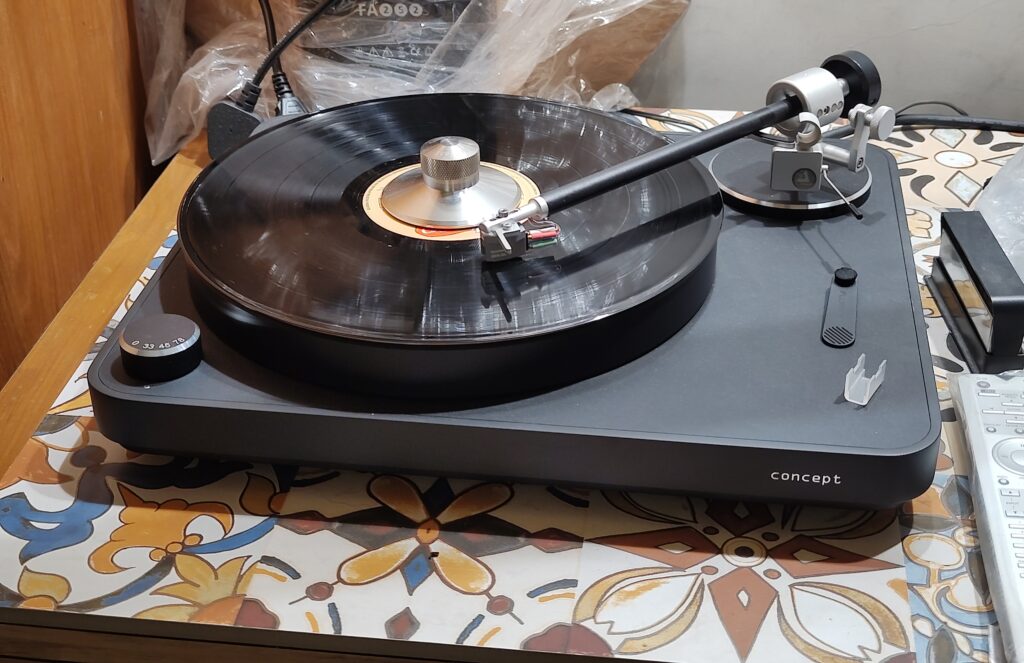
The turntable: The Clearaudio Concept was bought used from a very nice music lover in Chennai who had bought it brand-new, in an upgraded configuration from the manufacturer. Instead of the Concept tonearm, it has a Clearaudio Satisfy Kardan aluminium tonearm, and came with a Clearaudio Jubilee MM cart, which I later replaiced with a Dynavector 20X2A high-output MC cart. COO: Germany
The SACD player: The Marantz SA12SE was bought new from Innovative Audio, their distributor in Bombay. I don’t believe in the idea of buying an expensive DAC after my CD transport — I’d rather reduce box count and spend money on a good player which has a good DAC. This is a player good enough for me to live the remainder of life with, provided it outlasts me. COO: Japan
The cassette deck: The Nakamichi CR4 (no link provided) was bought used from a seller on eBay UK for GBP 200 just before COVID. Then I got it shipped to another gentleman in Wales who is an expert in Nakamichi restoration and repair, and he overhauled, lubricated and calibrated it. I finally got it to India perhaps a year later, and it’s been in for a repair once with a local Indian Nak expert, but has otherwise been reliable and incredible in performance. It’s a newer generation Nak, not the older generation to which my ZX-9 belonged. This is the only item of my stack which has been out of production for decades. Nothing like it is being made by anyone any more. COO: Japan
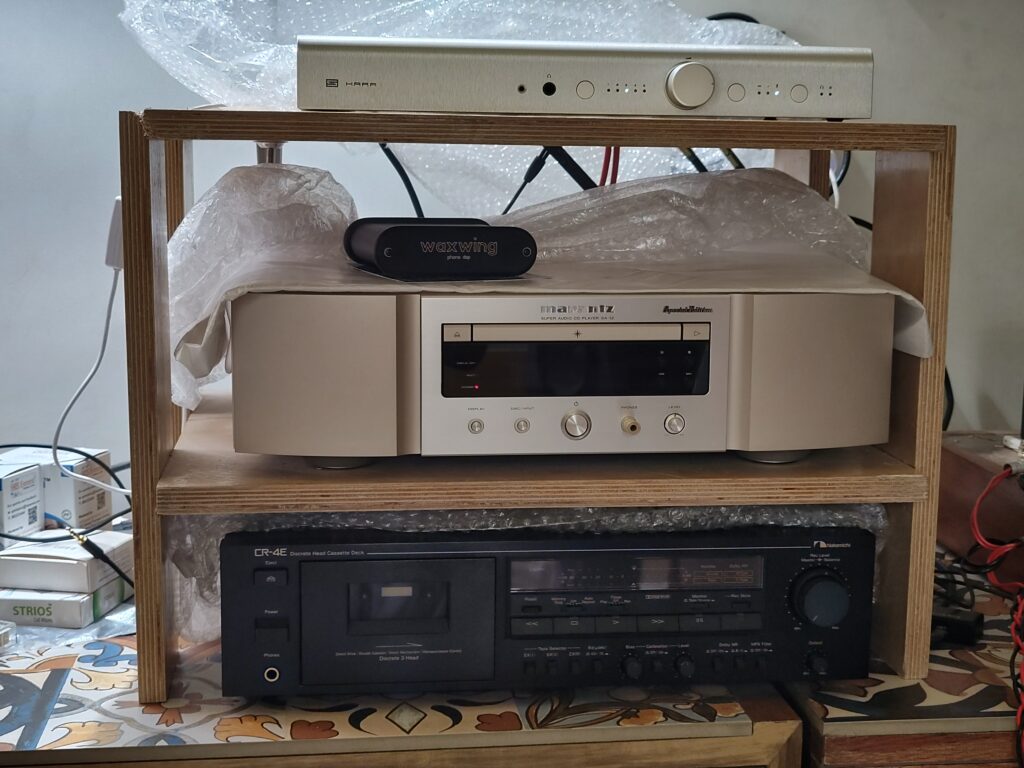
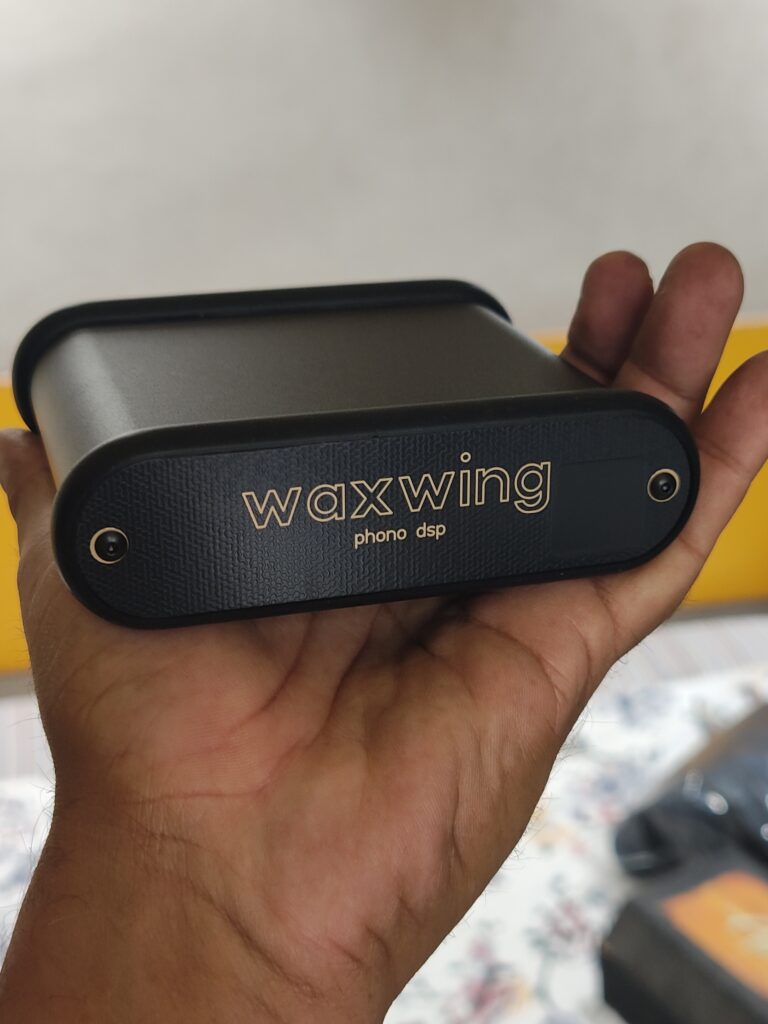
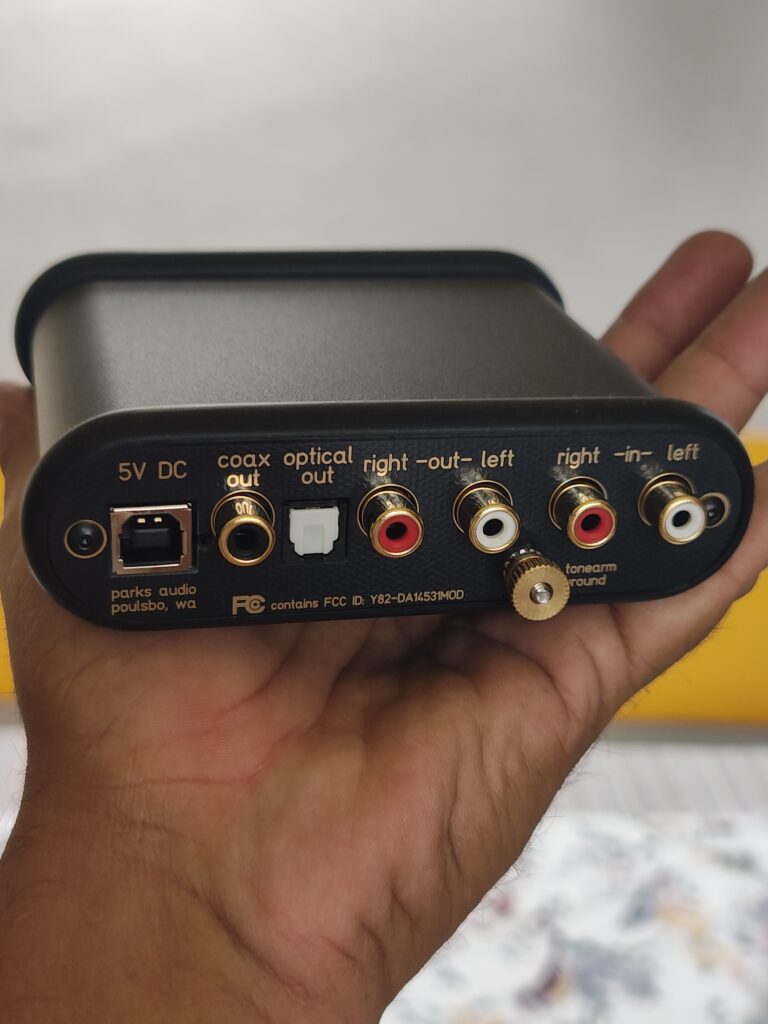
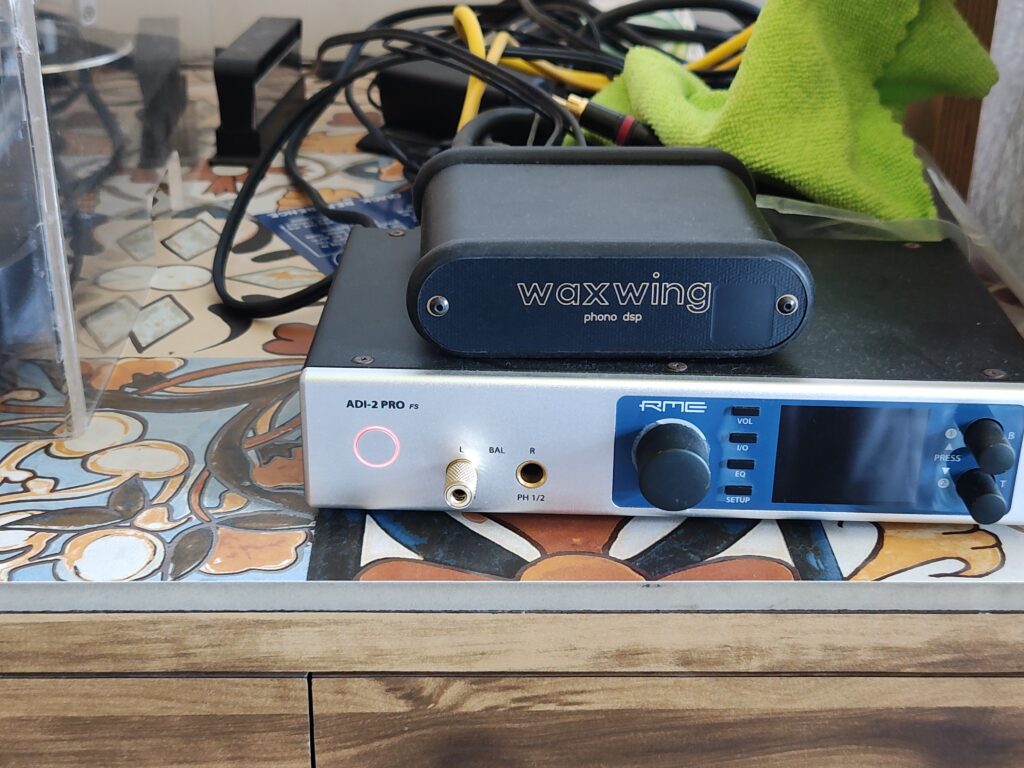
The phono preamp: The Parksaudio Waxwing is a very high performance MM/MC phono preamp, which compares well with the PS Audio Stellar Phono which costs 5x. I bought it less than two years ago. The Waxwing is made by a small outfit headed by a genius designer, Shannon Parks. It converts the minute incoming analog signal to digital and does all equalisation and processing in the digital domain, before converting the bits into analog output. This allows it to deliver features no pure analog circuit can. COO: USA
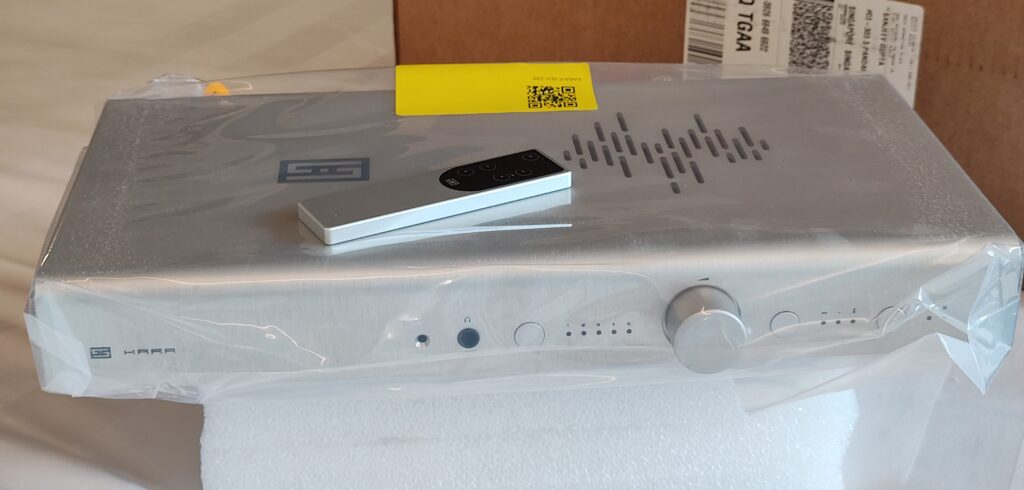
The preamp: I am using a Schiit Kara F analog preamp, which has five inputs, two outputs, a headphone output, discrete circuits for amplification and relay attenuated volume control. I bought it a year ago. It has balanced inputs and outputs, very good objective specs, high signal headroom (100V peak-to-peak on the balanced outputs), and can drive its output with high gain, which I need to drive my power amp. COO: USA
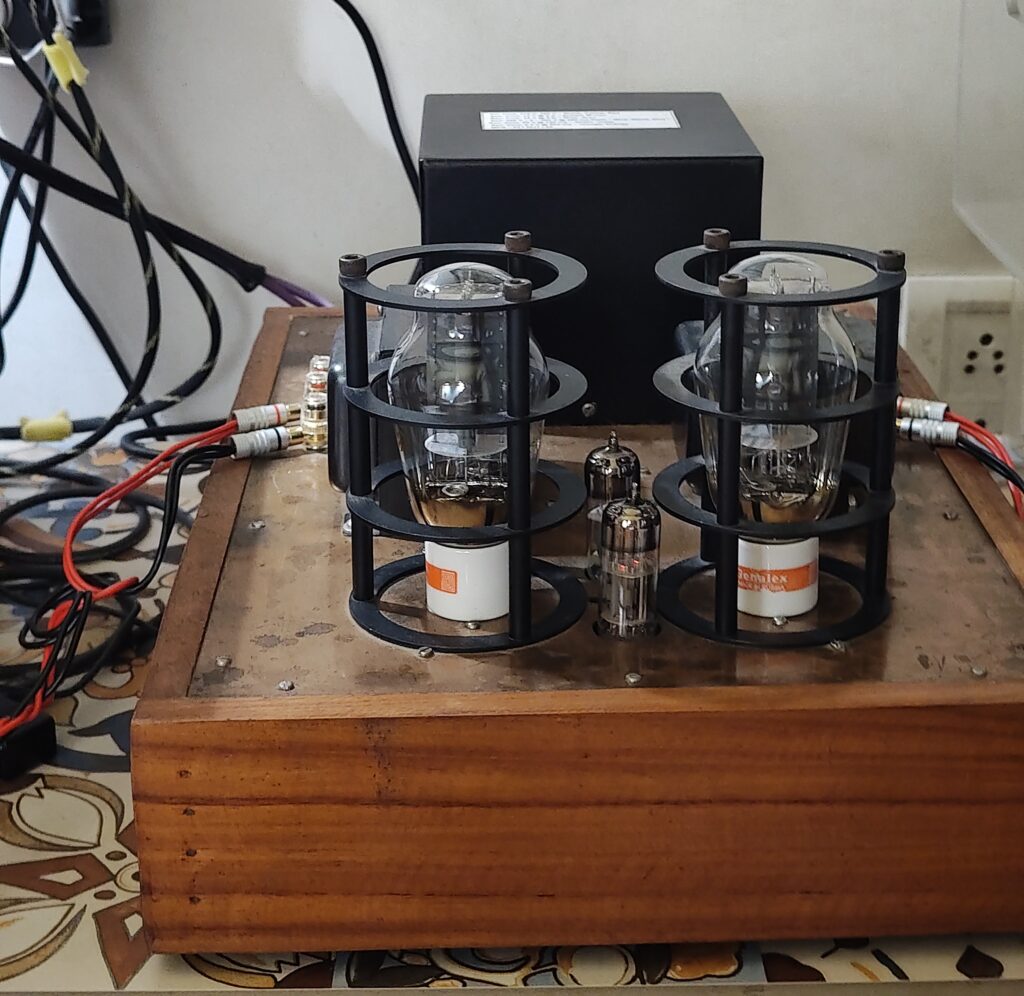
The power amp: It’s a DIY SET valve amp which uses 300B valves for its main power output tubes. It was designed by Tom Christiansen, who is in the same league as Shannon Parks and other top audio designers. It’s an unusual design for a valve amp, because it uses excellent solid state circuits for its rectified and regulated power supplies though it uses only valves in the signal path. This makes it one of the lowest distortion and lowest noise valve amps I have encountered. It has a low input sensitivity of almost 4V RMS, which makes me use a preamp like the Kara to drive it. The kit is not in production any more. COO: Canada
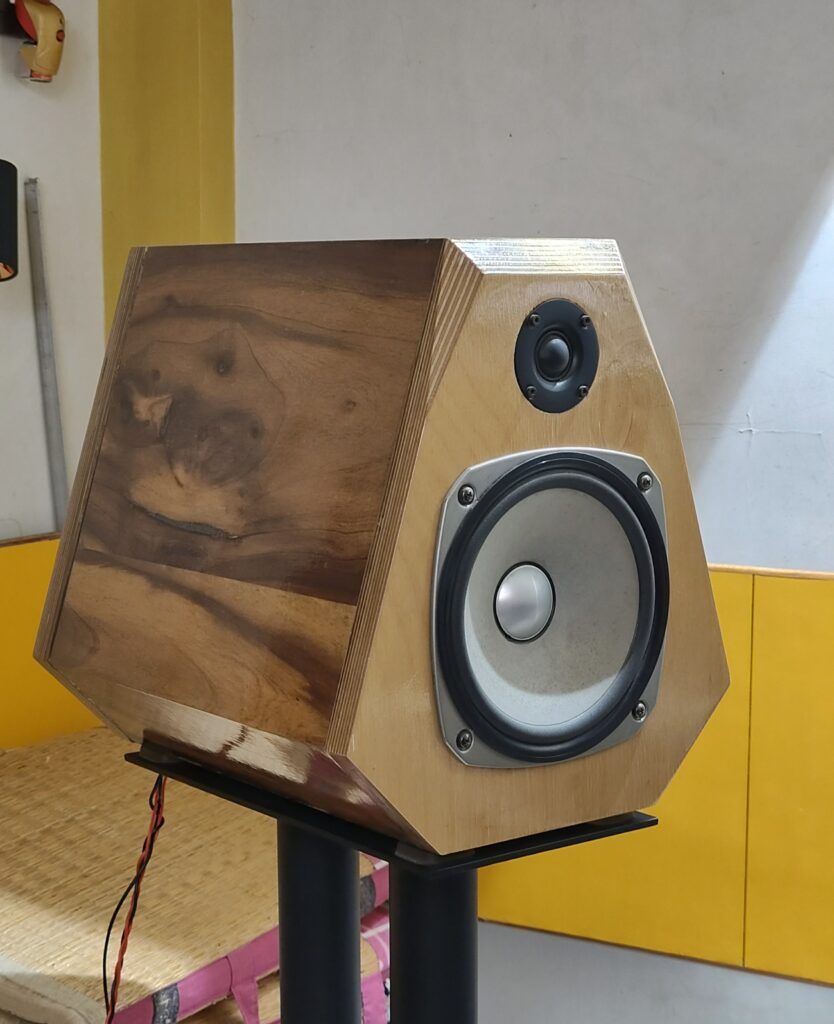
The speakers: the Bihagda are a 2-way bass reflex standmount with an 8″ full-range driver from Fostex and a 1″ soft dome tweeter from SB Acoustics. It has a very clean and dynamic sound and was designed for nearfield listening on axis in small to medium rooms. It has 4-6dB higher sensitivity than most modern speakers. COO: India
The Swiss Army knife: it’s a studio quality product from RME which has the ability to drive both high sensitivity and power hungry headphones, or convert between analog and digital audio in various formats. It can act as a USB recording interface to rip cassettes and vinyl. I use it as a headphone amplifier (it can drive planar-magnetic headphones with ease), a spectrum analyser, a USB audio interface, or a VU meter for various channels. It’s the most feature-rich audio box I have ever owned. COO: Germany
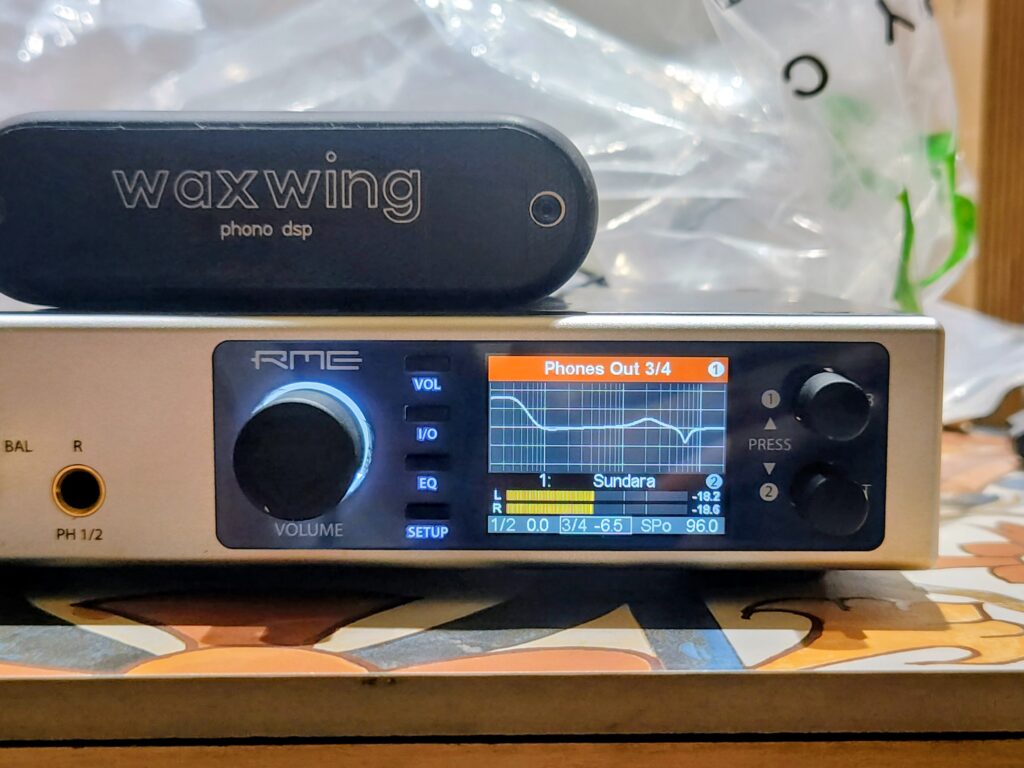
The USB to SPDIF converter: the Cubilux is a tiny, inexpensive box which I use purely to rip vinyl, because the Waxwing generates a 24/48 or 24/96 digital audio stream from my vinyl. COO: unknown, probably China
The Walkman: The Sony Professional Walkman is one of the few Walkmans which can drive high-Z professional headphones, work with all three tape types, record on all three of them, have actual fixed-gain line outputs, and apply Dolby B and C. It’s one of the Rolls Royces of Walkmans. I bought it used from the UK or US, I don’t remember. Its performance for playback rivals all but the top-end desktop decks. COO: Japan
Cables: this is a good place to be sensible and save money. My interconnects are from Blue Jeans Cable, Sonic Plumber, Sound Foundations, and AmazonBasics. Speaker cables can be made from good stock for speaker purposes, or from mains electrical cables. Connector quality and termination of cables often affect the sound far more than raw cable stock quality.
If I have spare cash, I’ll spend it on room treatment, design additional speakers to experiment with, and experiment with solid-state power amps. A very high quality solid-state DIY amp is in the pipeline, about 240W/ch into 8 Ohms. The rest of my gear can be in my stack as long as it keeps working, no upgrade needed.
-x-x-x-x-x-