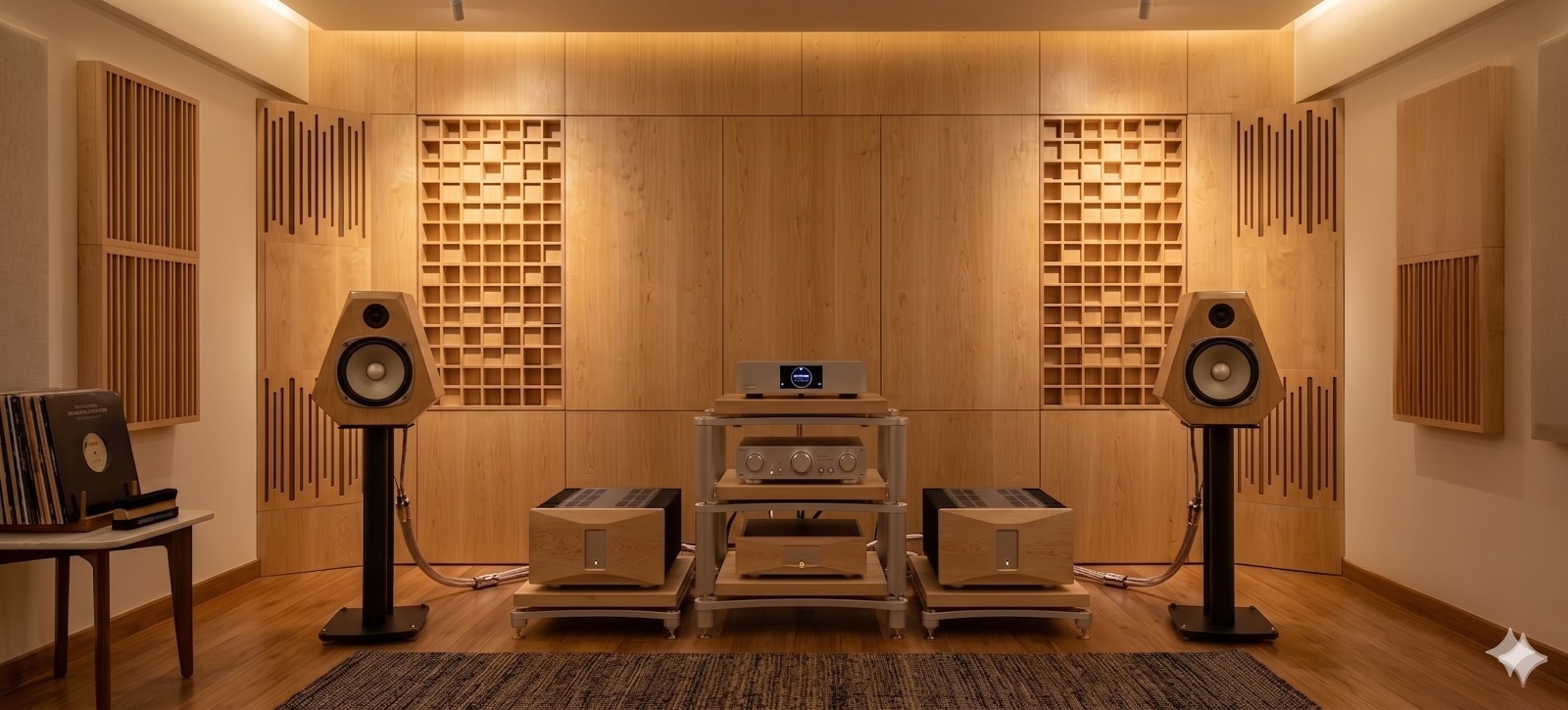
The Bihagda is my attempt at making a small standmount with higher than normal sensitivity, so that I could use it with a SET amp if such a wish arose. (I have friends who have valve amps and threaten to send one my way.)
Design notes
The first aim was to build something which would deliver higher sensitivity, even sacrificing that last bit of accuracy or cleanness if necessary. It needed to fill a small room with music when driven from an 8 W/ch SET valve amp.
The second aim was to avoid complicated and gigantic enclosures. Therefore BLH (Back Loaded Horns) were out of the question. I wanted a small stand-mount if possible. This meant that I’d have to build a bass reflex box.
The third aim was to listen in a smallish room, fairly nearfield, more or less on axis. A personal listening space.
With these aims in mind, I went looking at various drivers. My first idea was to explore pro drivers, which have large magnets and are famous for high sensitivity. But I quickly realised that I want a small midbass unit, not a 18″ umbrella-sized unit. I also realised that these woofers are designed for active eq to deliver deep bass, whereas I was looking for a driver which would go deep enough for domestic listening with just a bass reflex box, without any active eq. Most pro woofers have high Fs. So, that search didn’t get me anything.
Drivers
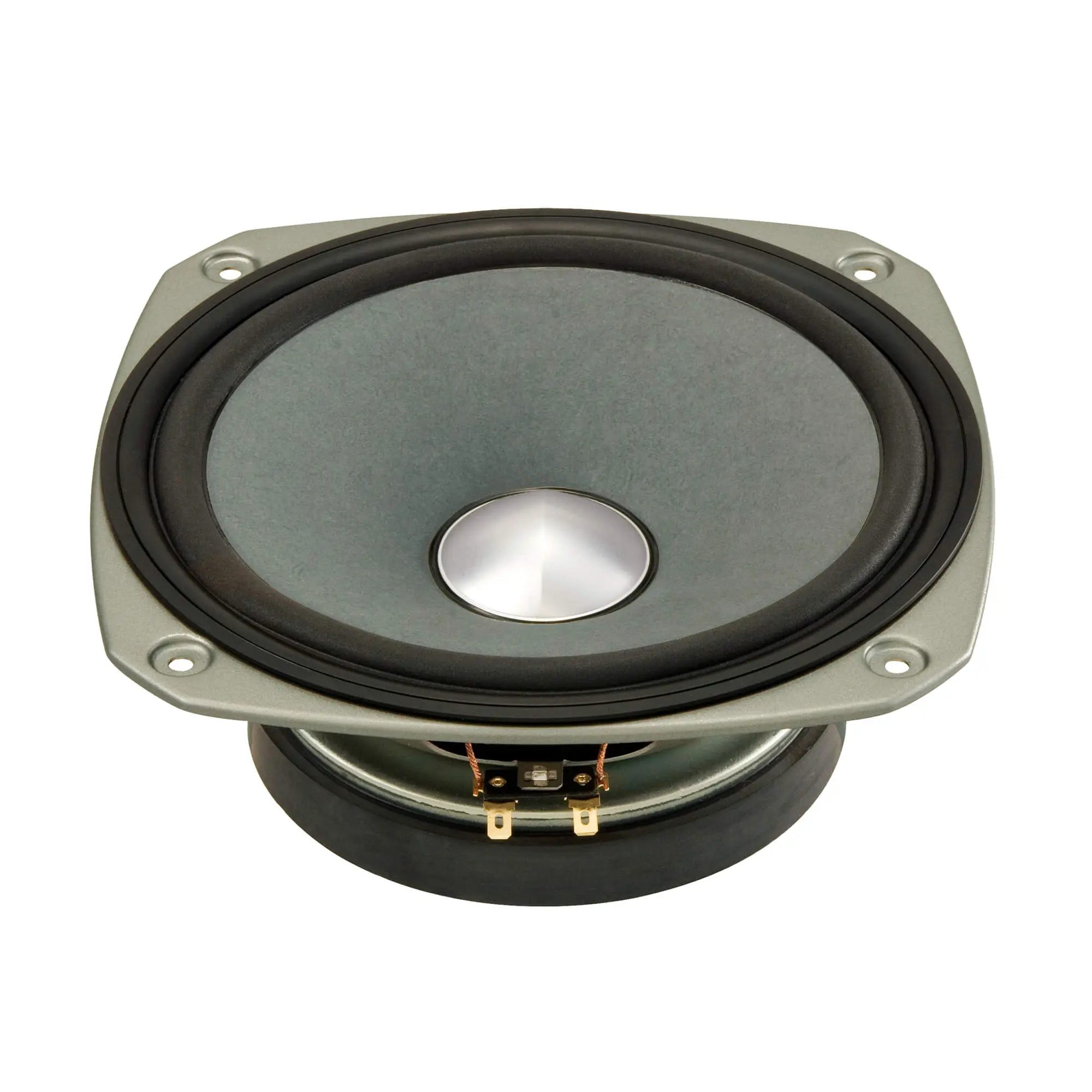
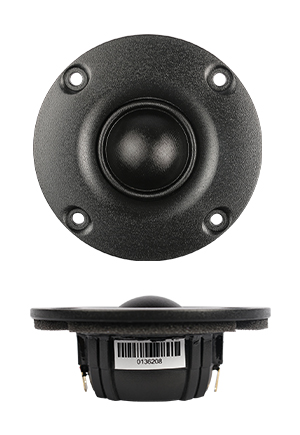
I finally found the FF range from Fostex. Unlike the rest of the Fostex families, the FF range is designed for bass reflex action, and I chose the largest of the range, the FF225WK 8″ driver. They call it a full-range, but I don’t treat the label as a literal description of these drivers. I mated the driver to a fairly efficient simple dome tweeter. Tweeters of even 94dB/W/metre are not uncommon, and I picked something from SB Acoustics which was inexpensive and quite good — the SB26STCN.
Enclosure
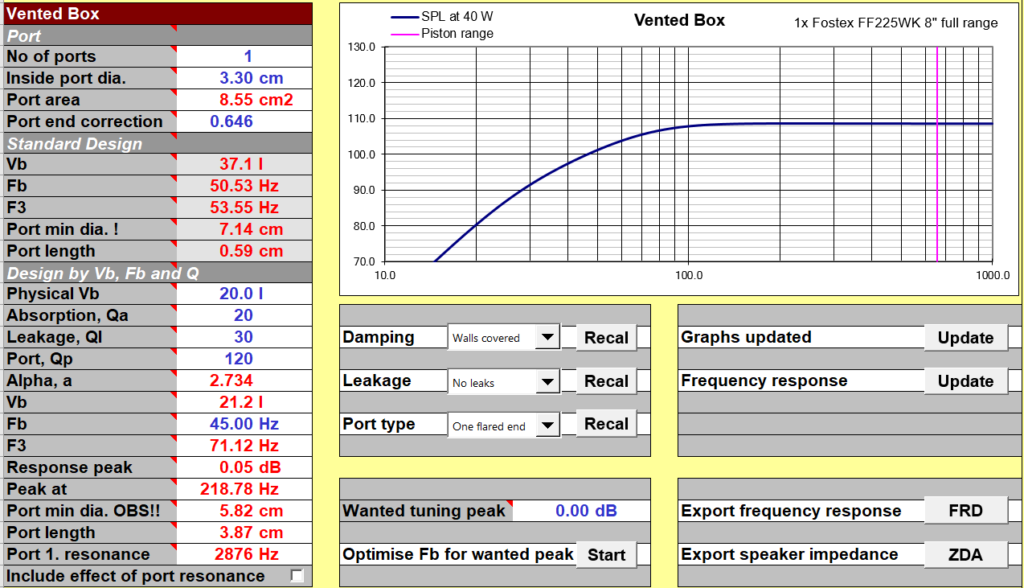
Modelling the Fostex in Unibox gave me a 20-litre bass reflex configuration which seemed reasonable, so here it is:
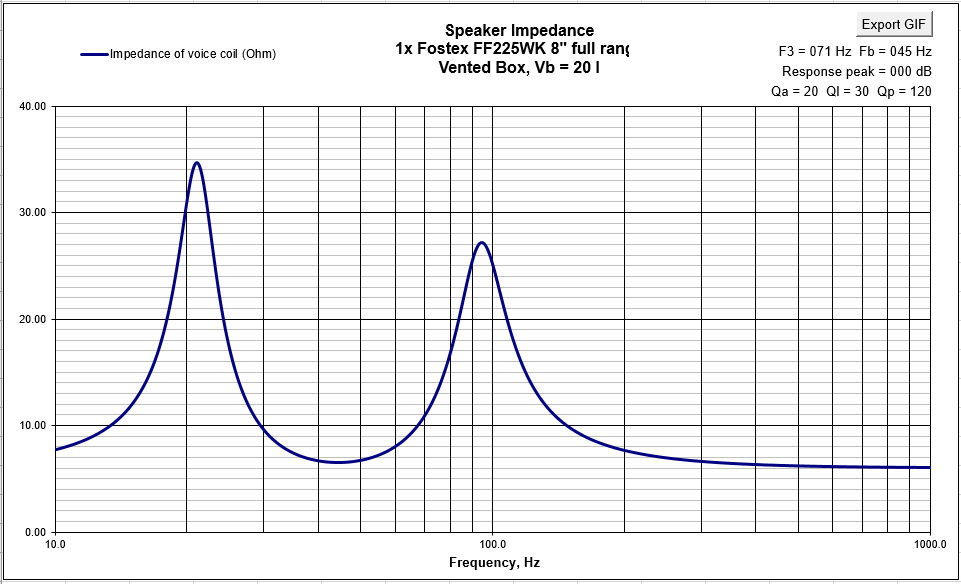
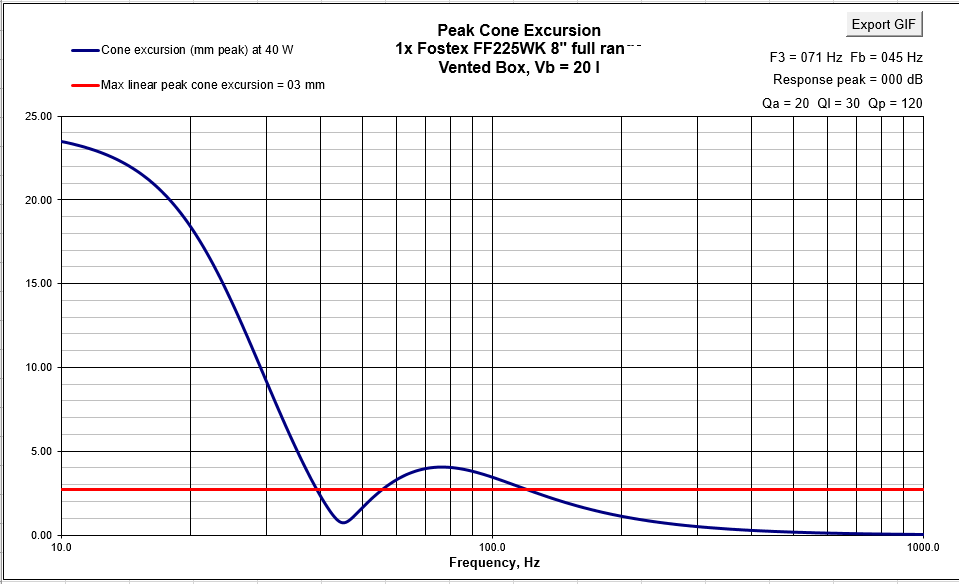
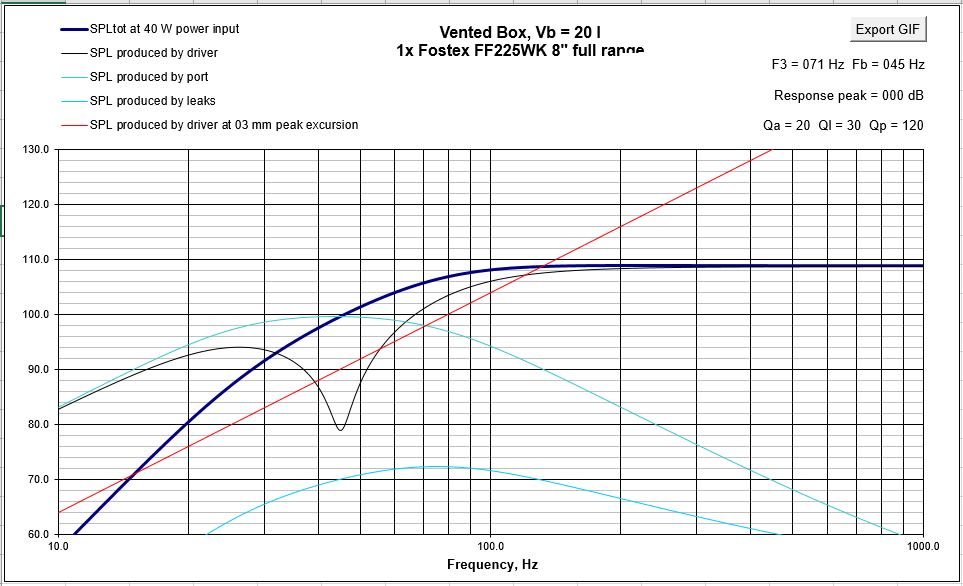
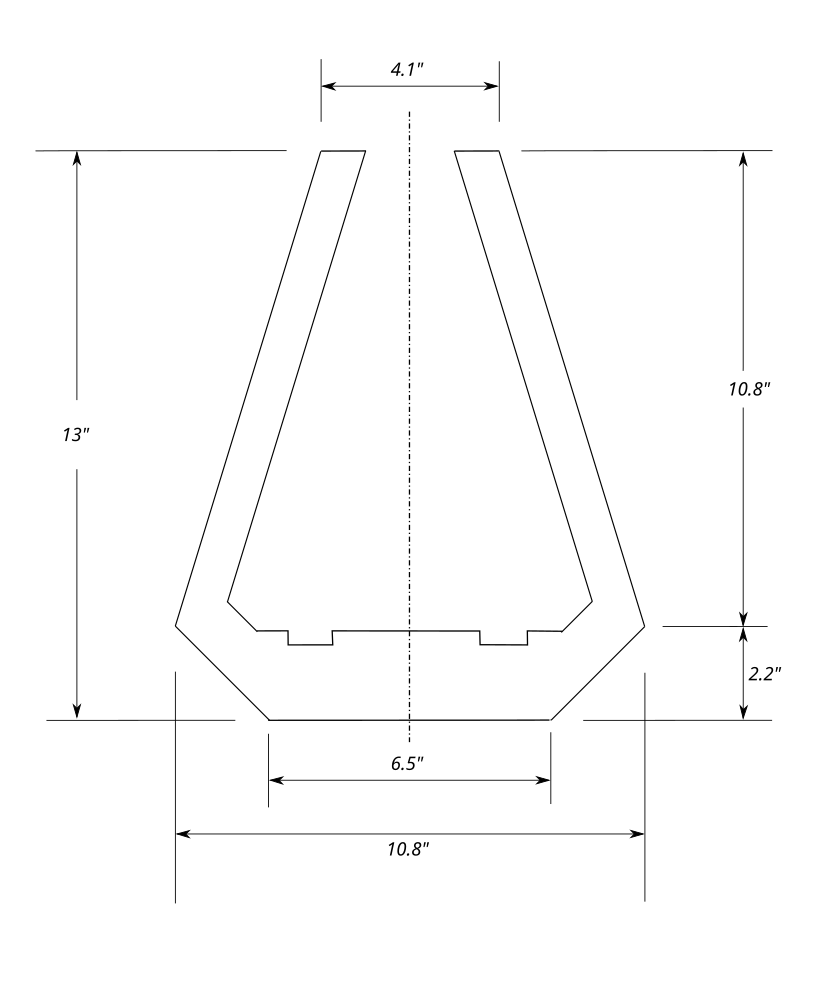
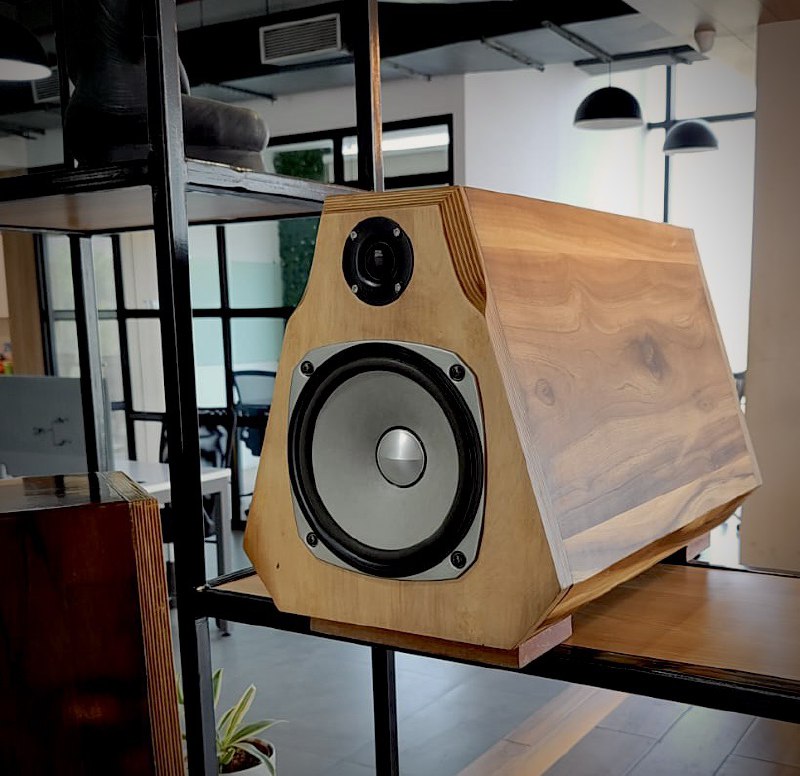
Working with the driver dimensions and the 20-litre volume, I arrived at this lovely external shape for the enclosure:
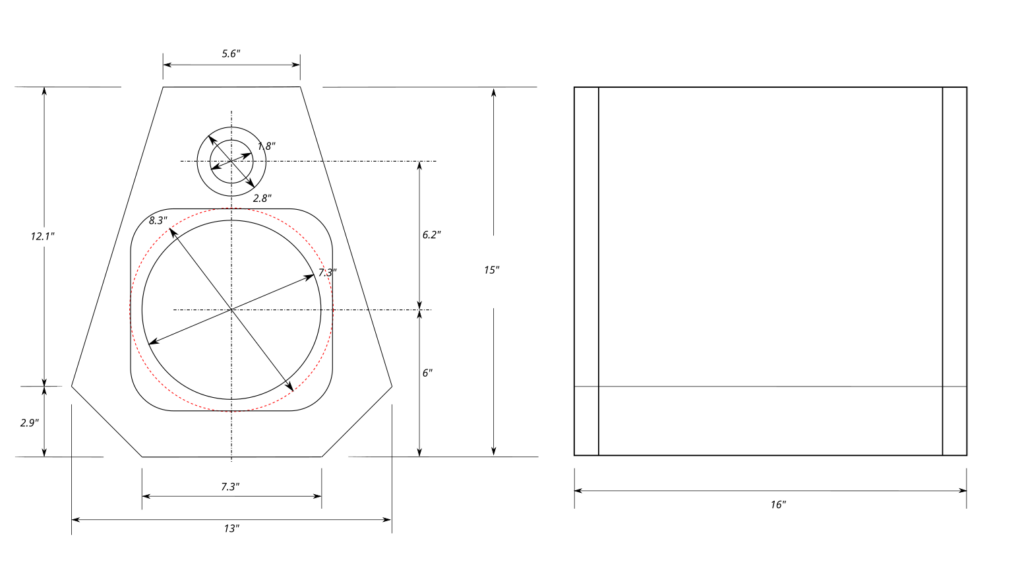
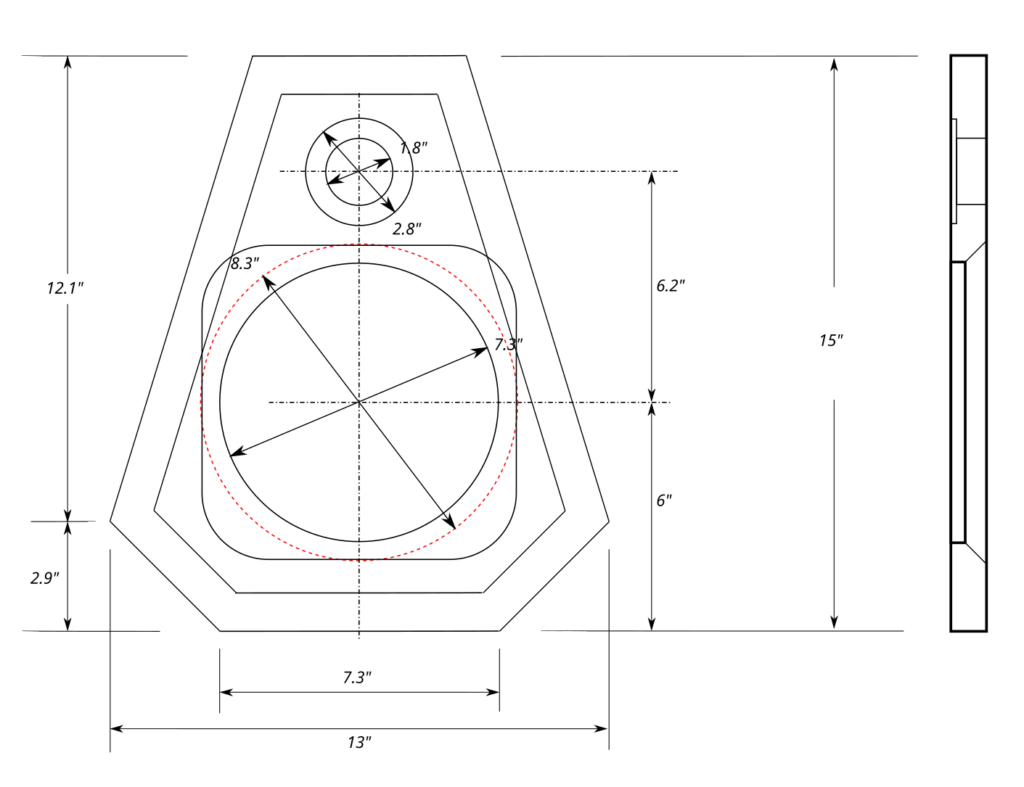
Other details are a drawing of the central vertical brace and some details of the cutouts of the front baffle.
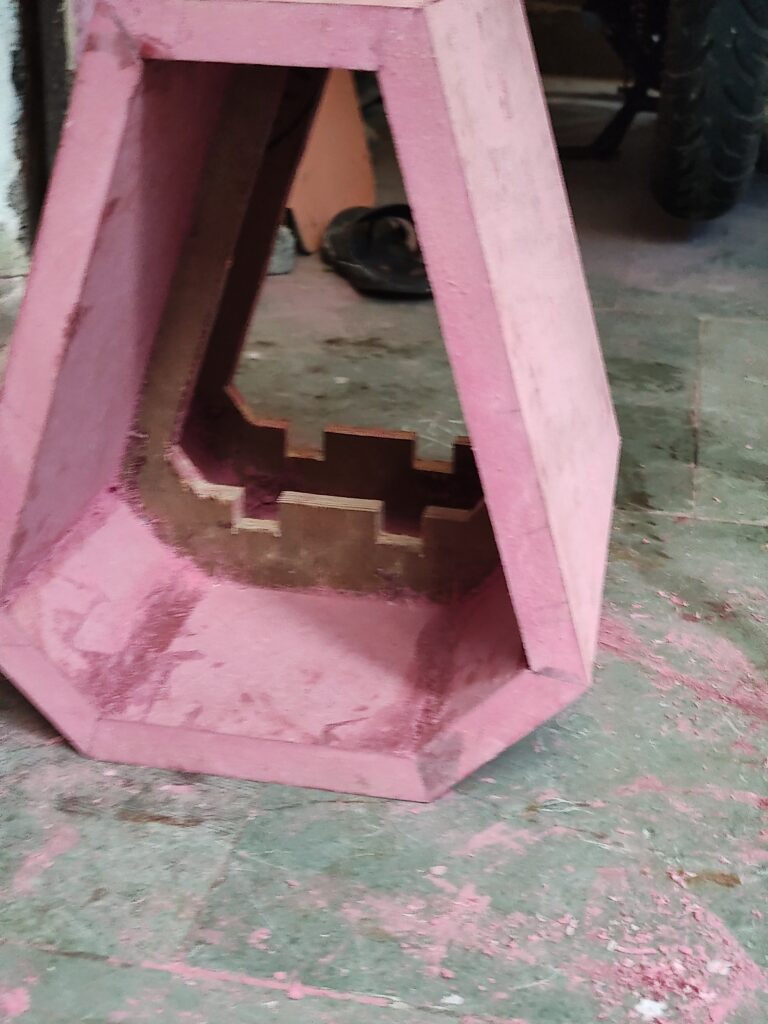
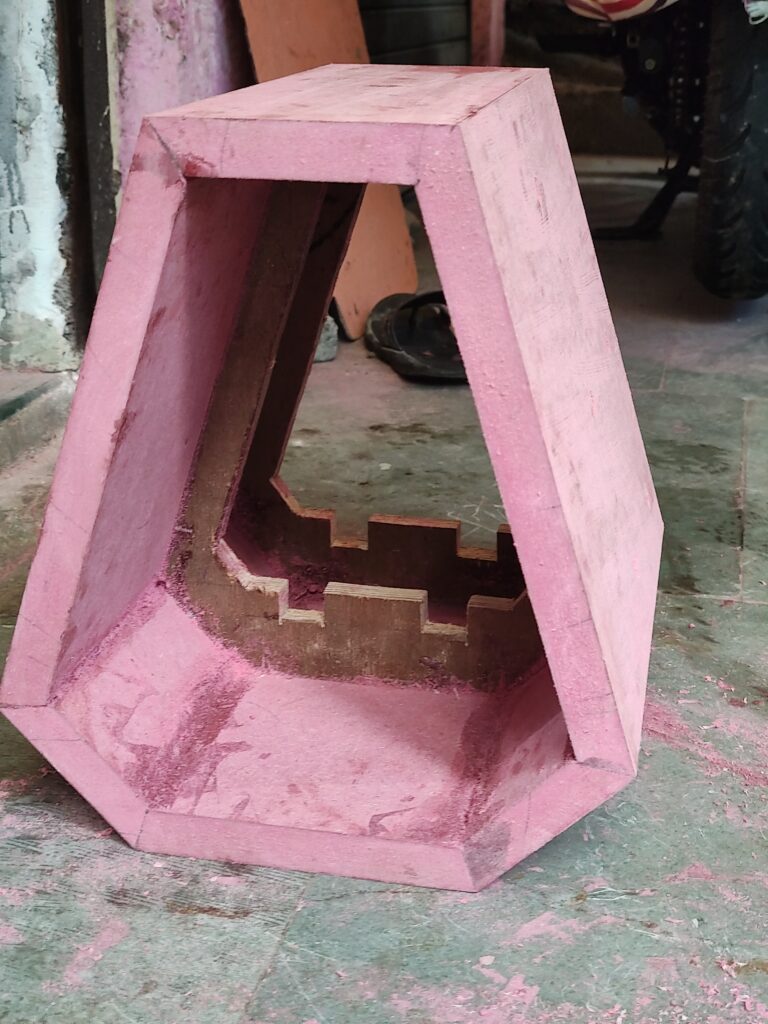
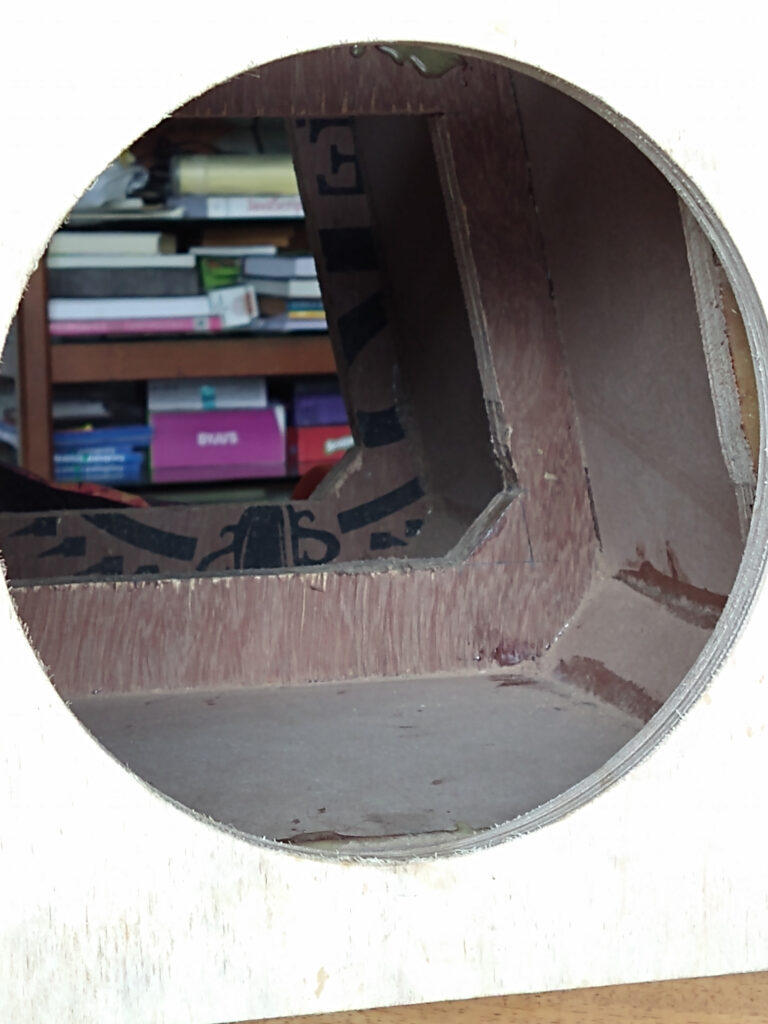
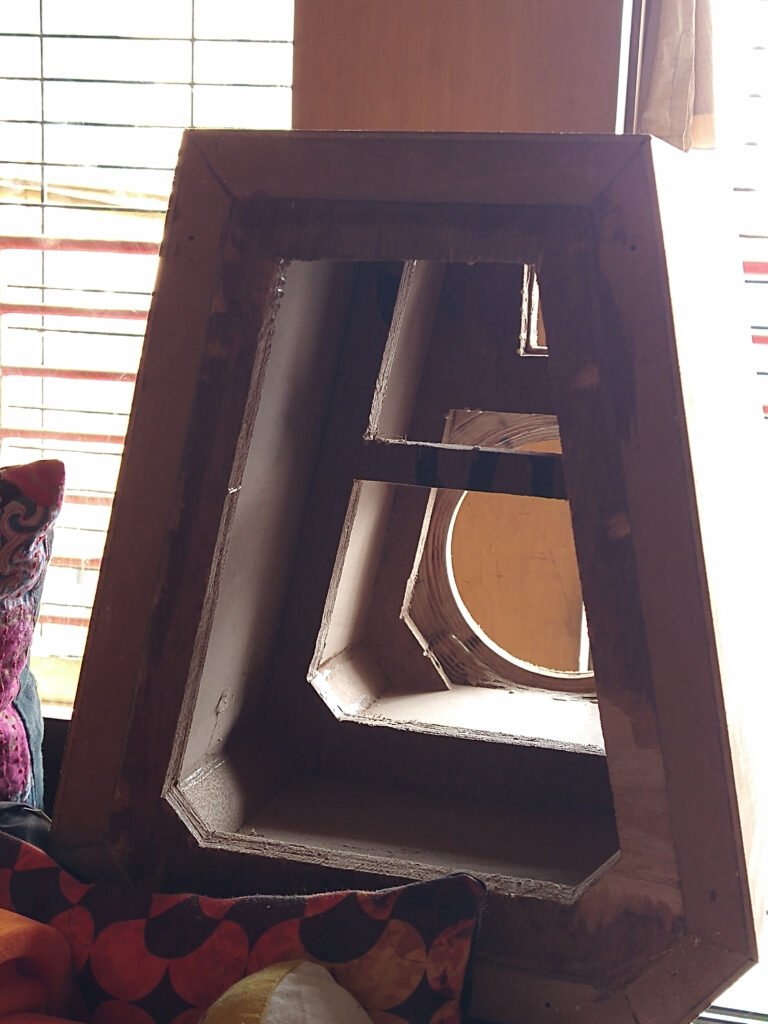
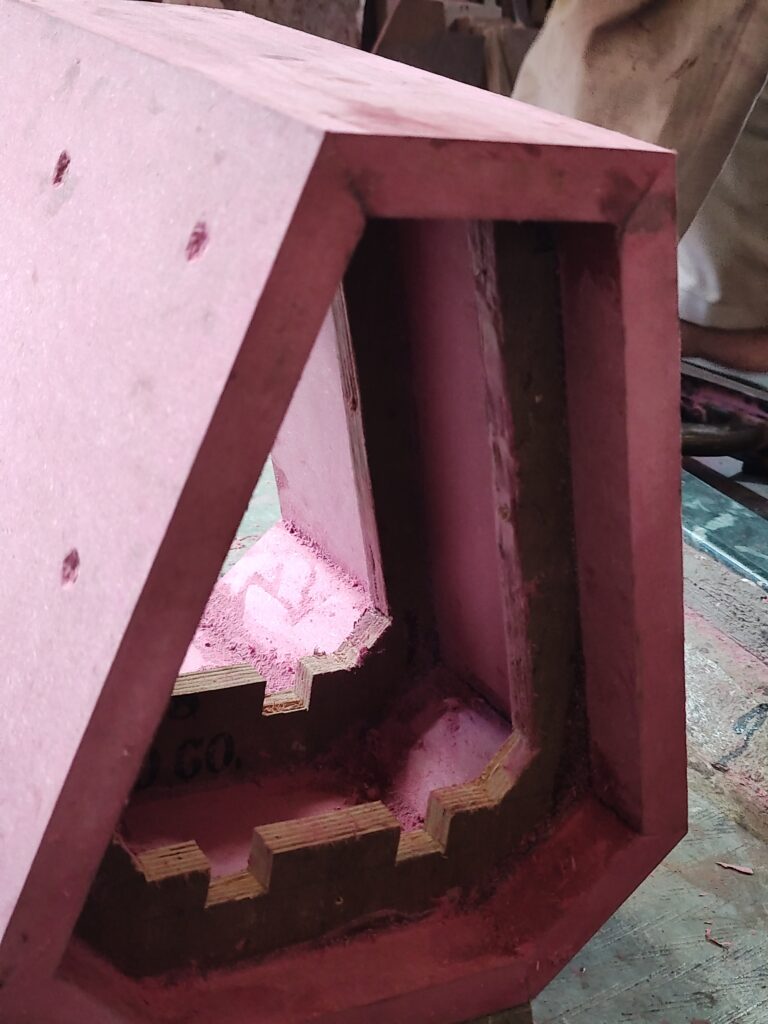
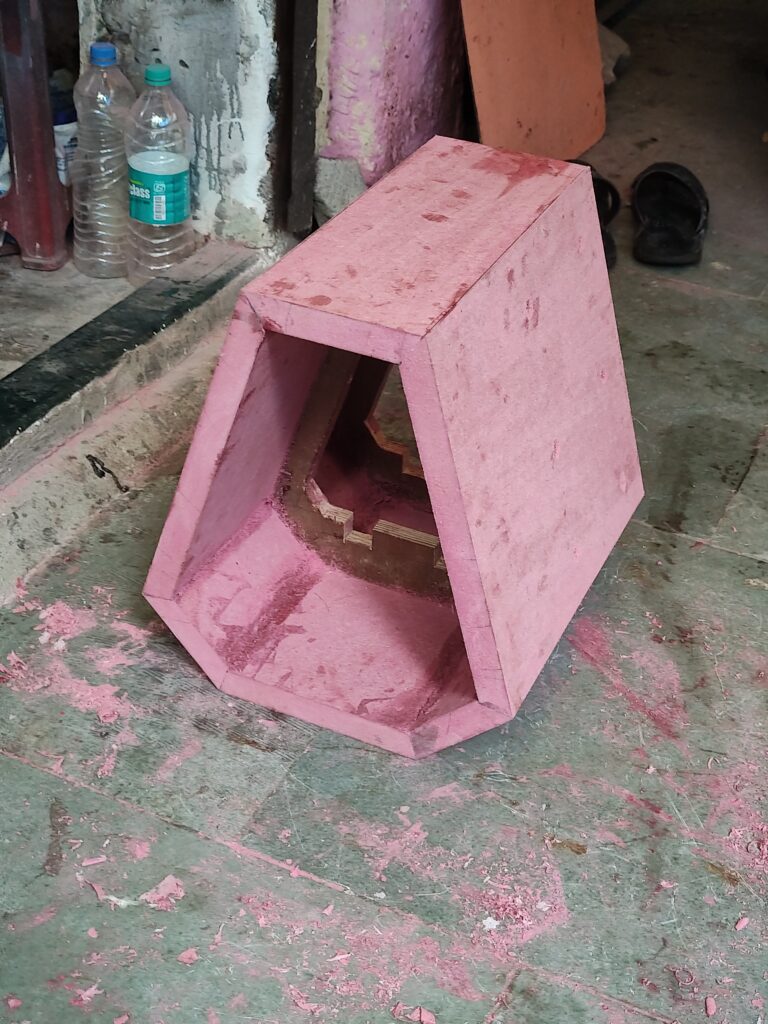
Here are various photos of the enclosures being built.
Measurements
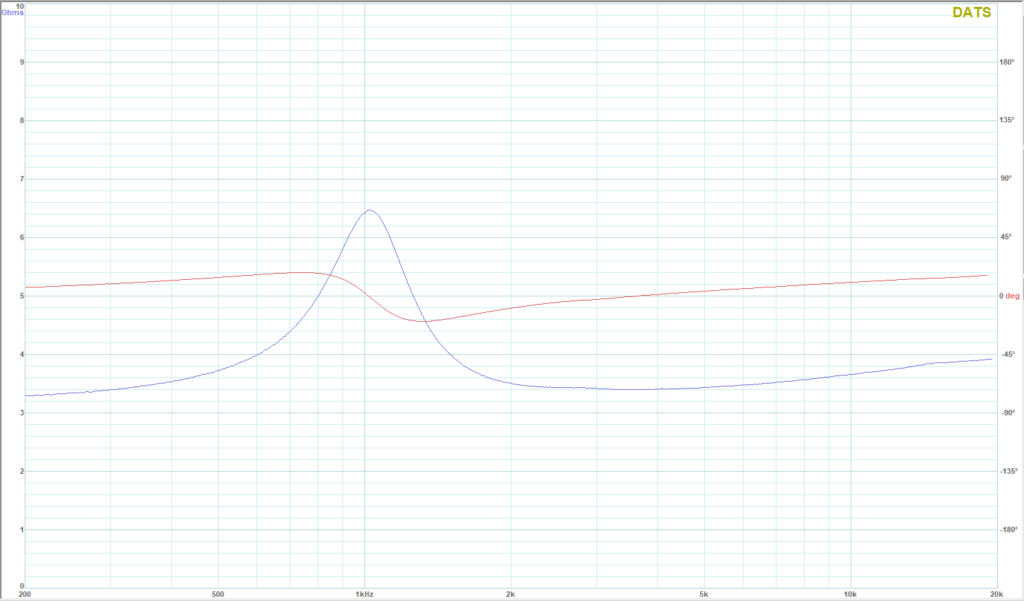
This is a simple 2-way design, therefore two gated farfield SPL measurements and two impedance measurements will be enough to arrive at a crossover design. No need to take nearfield SPL measurements and mate them to gated farfield, etc.
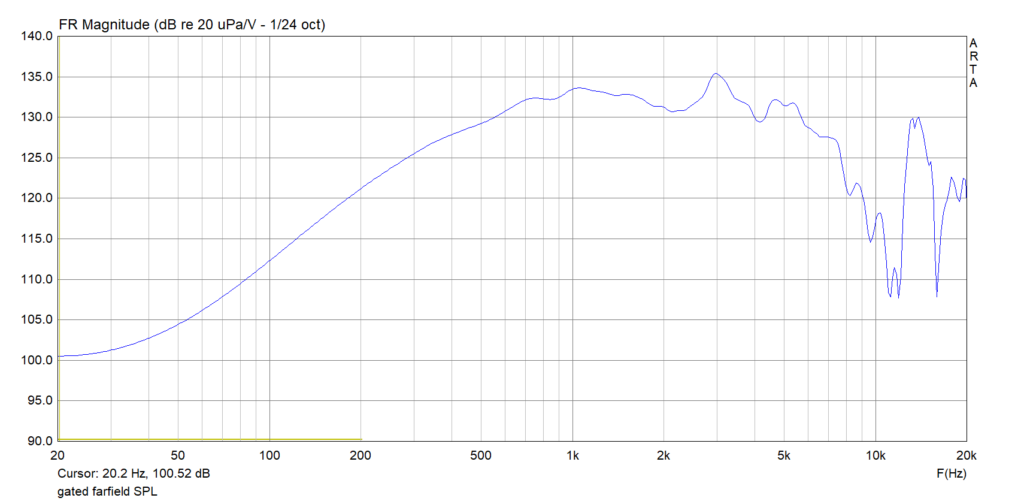
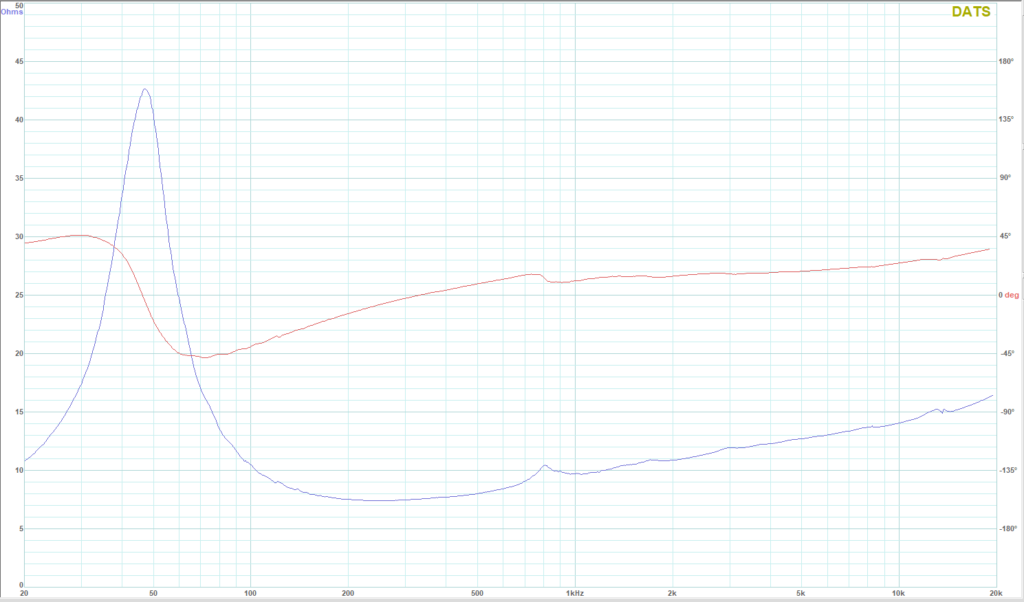
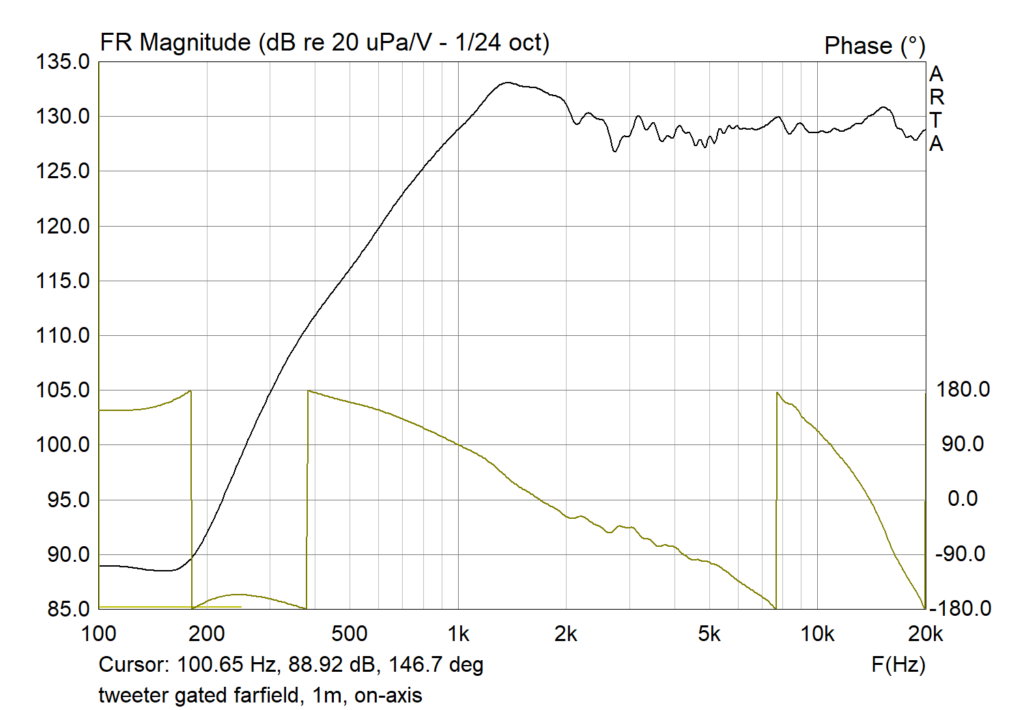
The Fostex has a smooth, clean, well damped cone behaviour, with a breakup zone so far into the HF region that the breakup will not cause a problem once a crossover comes in — the tweeter will take over that zone. The SB26 tweeter is clean and flat down to 2KHz, so any crossover which rolls off the tweeter at any point till 2KHz will get a very clean HF.
The crossover
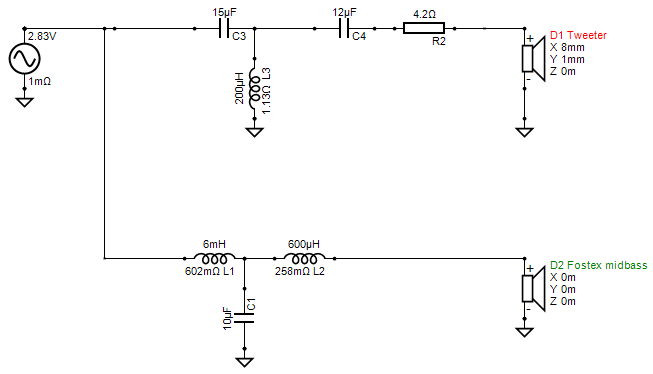
I designed a crossover, built it, put it inside the enclosure and took it home. This is the crossover circuit, circa July 2023.
The modelled SPL from this schema is as follows:
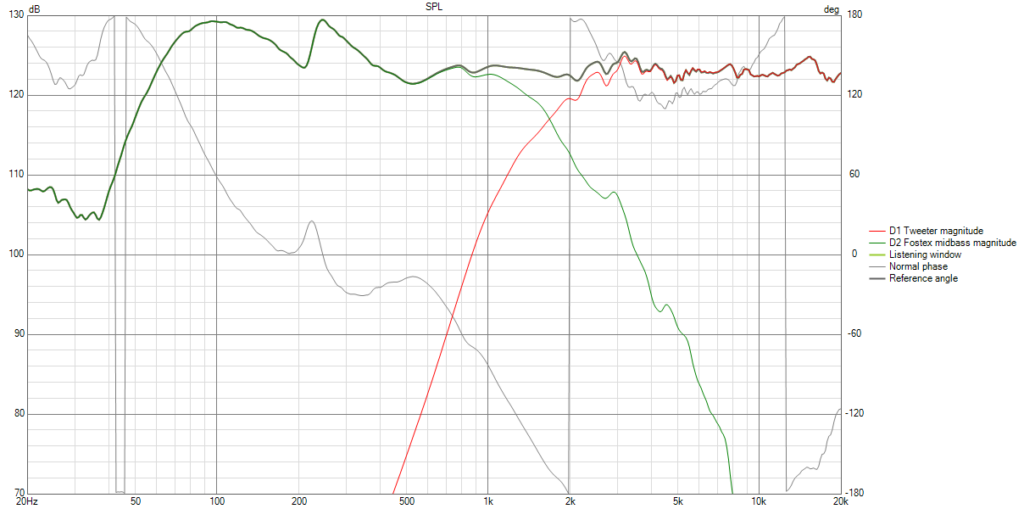
It looked good on paper, with a crossover point of about 1.8KHz, and it sounded good at home for the first few months. At my home, the first use-case of each new speaker is to reproduce TV soundtrack. Dialogues and background music sounded great — crisp, clean, and very legible.
But when I switched to music, everything sounded excellent for the first few minutes, but after that, about half the music sounded just a tad hard and “shouty”, to the point where I did not feel like continuing to listen to music. The undeniable characteristic of a “good” speaker is that it draws the listener into the music. I tried to go into denial, so I brought some friends home and asked them how they found the sound. They confirmed my earlier impressions — something was just that bit edgy and harsh to rob the music of pleasure. People who have not paid attention and listened to good quality audio systems, or who have been brought up on a diet of HT systems, would not notice anything amiss.
This wouldn’t do.
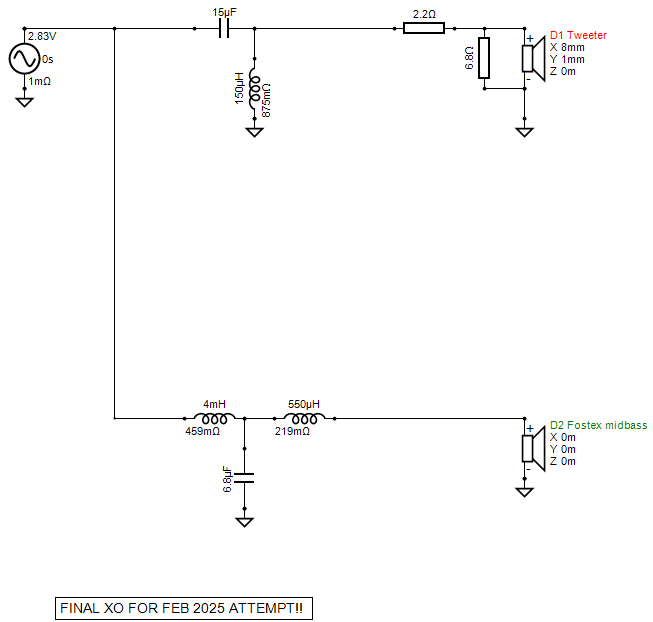
So, after poring over the crossover SPL plot and listening to music for a few more months, I decided that I’d like to try a crossover re-design where I would add a bit more warmth to the output. I’d cut the upper portion of the output, above about 400-500Hz, by 1-2 dB compared to the lower part. I did a fresh crossover design. This brought me to Feb 2025.
The new crossover circuit turned out as follows:
The SPL and impedance plot of this new crossover looked like this:
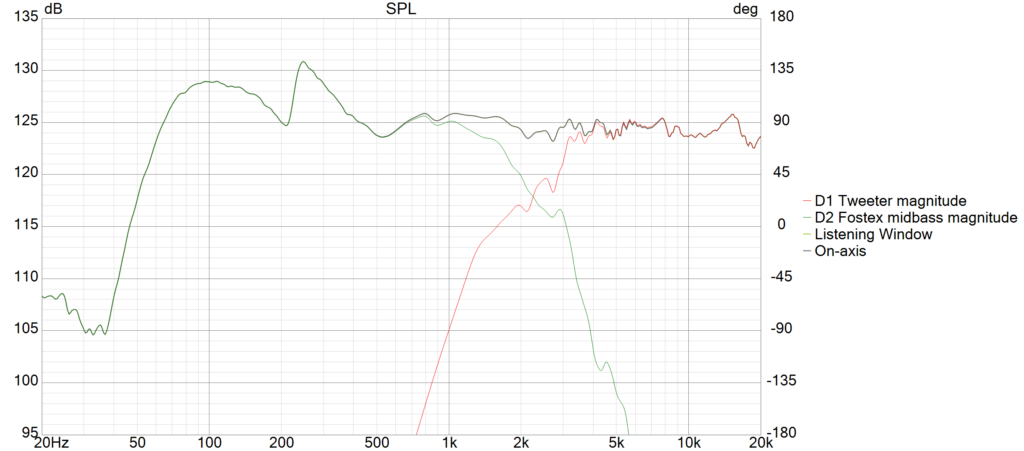
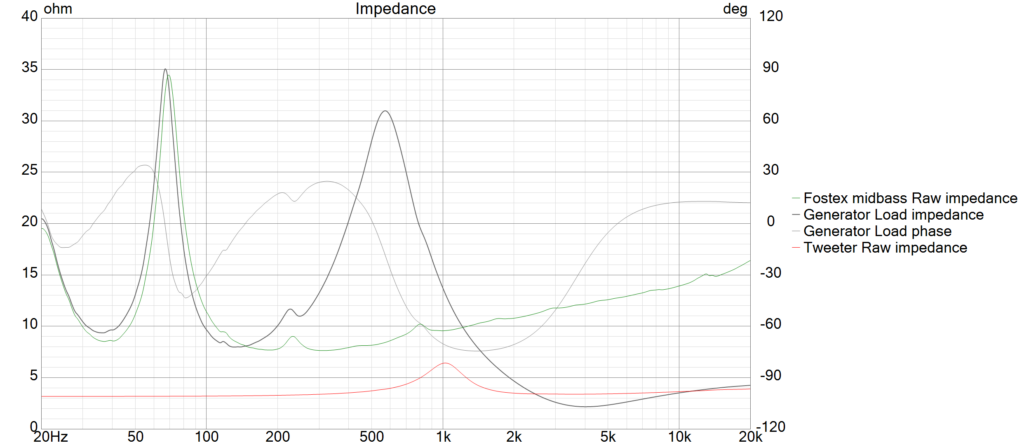
A side effect of the re-design was a shift of the crossover point upwards from about 1.8KHz to about 2.5KHz. I don’t know whether this contributed to the improvement in the sound quality which emerged.
The comparison of old and new crossover SPL, the all-important “delta” plot, is as follows:
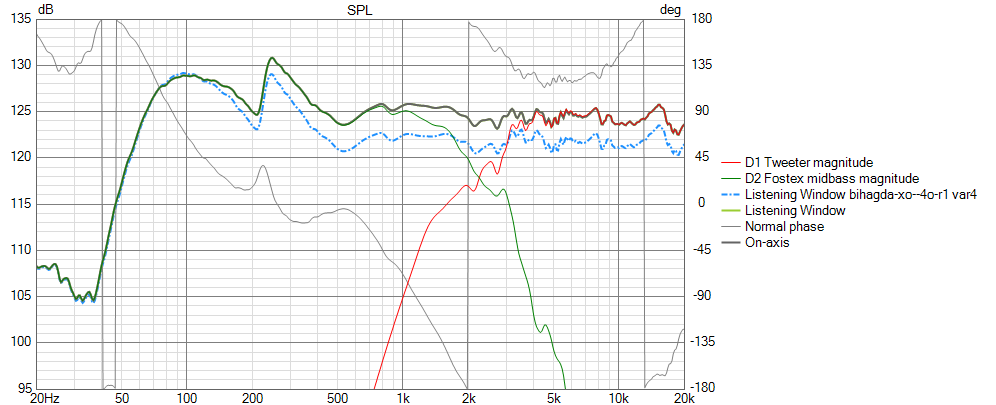
The full black line is the old crossover SPL, the dashed blue line is the new SPL.
I built the new crossover for one enclosure, so I could now play test tracks through both crossovers and audition the change. I made recordings.
To see differences clearly, I recorded a set of test tracks through the old and new crossover, keeping all other factors unchanged. I now have a set of 30+ files, each 16/48 FLAC, in each of two sets:
Each ZIP file has the same 30+ tracks, recorded through exactly the same component stack, at exactly the same volume, with speaker and mic positions unchanged. Please feel free to download the zips (about 200MB each), extract the tracks you want, and see how you like the sound.
Since this was done in a quiet office, not a professional studio, you’ll hear background noise in the recordings. Each track is cut to about 90 seconds, they are not full songs. Even with the trimming, each set has almost an hour of content.
The aim, as you can guess, is to see what difference I can hear in the same track from the two sets, and to see if I can arrive at an overall preference for one set. Well, I clearly prefer the new crossover sound. Your mileage, as they say, may vary.
The sound
These days, it seems that the popular way to communicate the sound of an audio system is by sitting in front of it and shooting a cellphone video while the system is playing music. So, here goes. Some of the videos were taken when the speakers were driven by a good Roksan solid-state amp, others when it was being driven by a SET valve amp. The source was varied: vinyl, cassette, FLAC files, and CD.
If videos are too distracting and you want pure audio, then there is a zip file of 30+ short tracks recorded by a measurement mic, here, which you can download and listen to. During that recording session, the source was FLAC files, fed through a good high-power MOSFET amp (a Roksan Kandy KA1 Mark III), and the recording mic was my measurement mic.
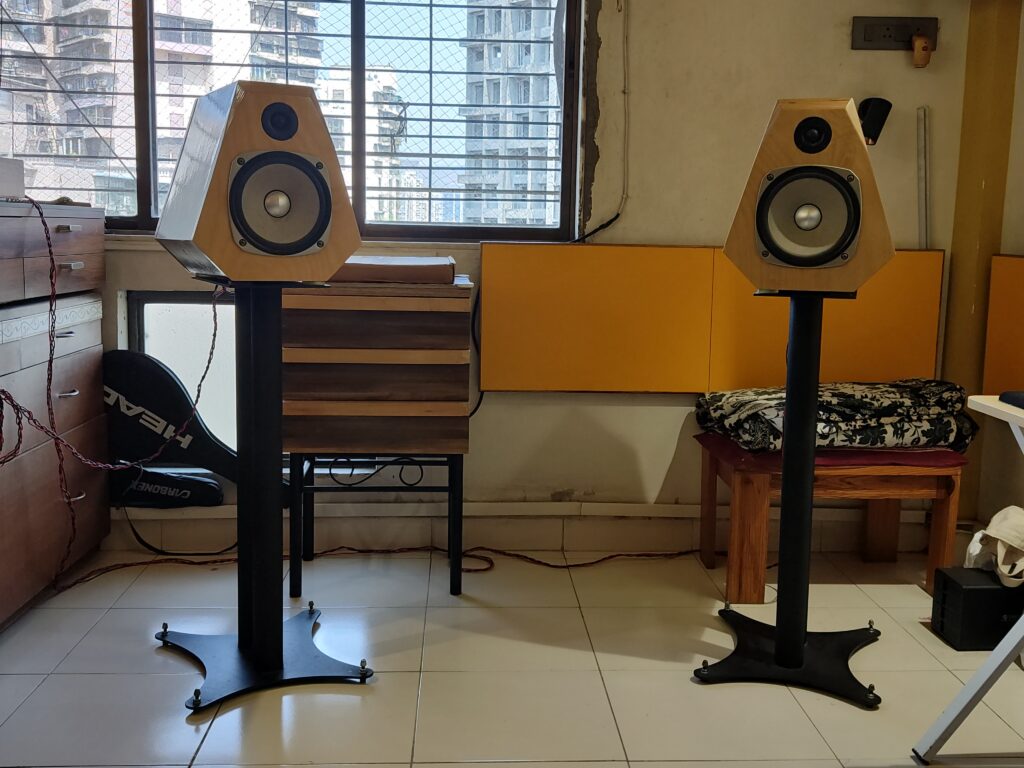
I find the sound of the Bihagda to be very balanced. The sound becomes livelier when driven by my solid-state Roksan amp. The speaker is not hyper-detailed, but it clearly shows up differences in the source material, the source medium, and the amplifier. Other than heavy metal, the speakers seem to do a very good job with all kinds of music.
-x-x-x-x-x-